


 support@epicgifts.org
Table of Contents
- How to Wrap Jewelry Without a Box
- How to Wrap a Necklace as a Gift
- Sustainable Gift Wrapping Ideas for Jewelry
- Minimalist Jewelry Gift Wrapping Techniques for Rings, Earrings, and Bracelets
- Protecting Jewelry from Tangles and Scratches
- Common Gift Wrapping Mistakes to Avoid
- Conclusion: Wrapping with Heart and Intention
- Frequently Asked Questions
Last Updated: October 12, 2026
How to Wrap Jewelry Without a Box
Minimalist jewelry gift wrapping techniques start with one simple idea: you do not need a box to make a gift feel special. A soft cloth, a strip of ribbon, and a few careful folds can turn a small piece into something that feels intentional and elegant.
Here is the core method, step by step:
- Cut a square of tissue paper about three times the width of the jewelry.
- Lay the piece flat in the center, clasp closed, chain straightened.
- Fold the left and right corners over the piece, then roll it into a soft bundle.
- Wrap a ribbon around the bundle twice and tie a small bow.
- Tuck a handwritten tag under the ribbon.
The whole process takes about two minutes.
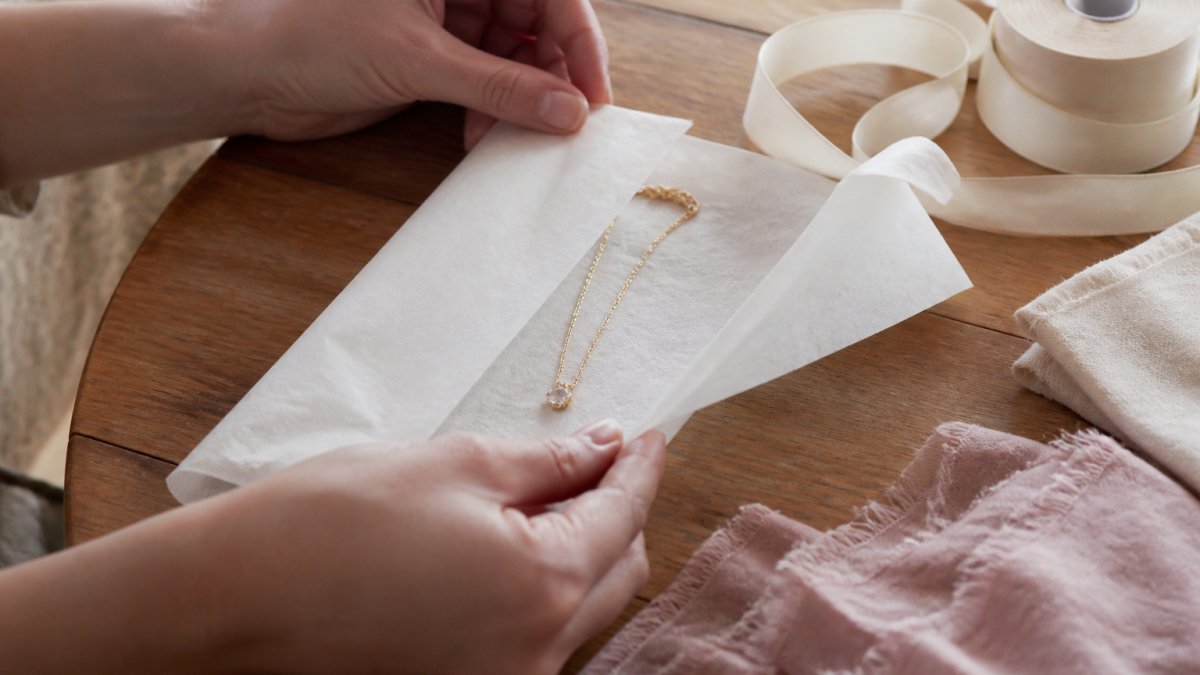
How to Wrap a Necklace as a Gift
The best way to wrap a necklace as a gift is to keep the chain straight and the clasp secured.
Start by closing the clasp. Then lay the necklace flat and check for twists.
Next, choose your method:
- Tissue roll: Roll the chain loosely around two fingers, then slide it off and wrap in tissue.
- Card method: Tape the chain across a small piece of card so it stays flat.
- Pouch method: Slip the necklace into a soft cloth pouch, then wrap the pouch itself.
For pendants, place a small piece of tissue between the pendant and the chain. This stops the metal from scratching itself during handling.
If you plan to ship the gift, add a second layer of padding.
Sustainable Gift Wrapping Ideas for Jewelry
Sustainable gift wrapping for jewelry means choosing materials you can reuse, compost, or keep. The goal is a beautiful presentation that does not end up in a trash bag an hour after it is opened. The harder question is which material actually fits your gift, your budget, and your time. Here is how the main options compare.
Material Trade-Offs at a Glance
| Material | Reuse Potential | Cost | Time to Wrap | Best For |
|---|---|---|---|---|
| Recycled tissue paper | Low (often composted) | Low | Fast | Small pieces, filler |
| Fabric scraps or offcuts | High | Low if on hand | Medium | Rings, earrings, small pouches |
| Reused textiles (napkin, sheet) | High | Low | Medium | Necklaces, bracelets, larger gifts |
| Furoshiki-style cloth wrap | Very high | Medium | Slow at first | Any piece, especially keepsake gifts |
| Reusable gift bag | High | Medium | Fast | Last-minute gifts, shipping |
| Paper tape and paper ribbon | Low | Low | Fast | Sealing any paper wrap |
Recyclable Paper
Recycled tissue paper and paper tape are the easiest swap. They cost about the same as standard tissue, wrap quickly, and can go in most curbside recycling or a compost bin. The trade-off is that paper has a short life. Once it is crumpled and taped, it is usually done. For a gift that will be opened once, that is fine. For a piece meant to be kept for years, paper feels mismatched.
Reusable Fabric
Fabric scraps, sewing offcuts, and old napkins are the standout choice for jewelry. A square of cotton or linen can be tied with a ribbon and reused for years, which makes it part of the gift rather than waste.
The trade-off is time and up-front cost. Cloth takes longer to fold neatly than paper, and buying new fabric defeats the purpose.
Furoshiki-Style Cloth Wraps
Furoshiki is a traditional Japanese cloth-wrapping method that uses a single square of fabric and knots instead of tape.
The trade-off is a learning curve. The first few wraps will look loose. After three or four tries, most people find a fold that works for their gift size. The payoff is a wrap that is genuinely reusable and needs no tape, ribbon, or paper.
Reused Household Materials
You do not need to buy anything to wrap a small gift well. A clean jar with a lid can hold a bracelet. A small tin can hold earrings.
The trade-off is consistency. Reused materials come in odd sizes and colors, so a set of gifts may not match. If a cohesive look matters, pick one material family, such as all cloth or all paper, and stay within it.
Minimizing Waste in Practice
- Cut tissue to size instead of crumpling a full sheet.
- Use paper tape instead of plastic tape so the whole wrap can be recycled.
- Skip the plastic window bag. It is the most common non-recyclable item in a jewelry package.
- Keep a box of fabric squares and reused pouches near your wrapping station so the low-waste choice is also the easy choice.
- If you ship, reuse a rigid mailer and cushion with crumpled paper rather than bubble wrap.
U.S. Environmental Protection Agency guidance on reducing waste at home
Minimalist Jewelry Gift Wrapping Techniques for Rings, Earrings, and Bracelets
Each type of jewelry needs a slightly different approach. Rings, earrings, and bracelets all have shapes that can slip, tangle, or scratch if you wrap them the same way. The table below gives you the quick answer; the steps after it give you the exact method for each piece.
| Jewelry Type | Best Wrap Method | Key Protection Step |
|---|---|---|
| Ring | Small tissue square, rolled | Wrap band so the stone faces up |
| Earrings | Pair on a card, then tissue | Keep pairs together to avoid loss |
| Bracelet | Roll into a soft coil | Close the clasp before rolling |
| Necklace | Roll or card method | Straighten chain, secure clasp |
| Watch | Cloth pouch, then ribbon | Pad the face to protect the crystal |
How to Wrap a Ring
- Cut a tissue square roughly 6 by 6 inches, or about the size of your palm.
- Place the ring in the center with the stone facing up. If the stone faces down, it can press against the paper and pick up a dull spot.
- Fold the left and right sides over the band, then roll the tissue into a tight cylinder.
- Pinch the ends and tuck them under, or tie a single ribbon loop around the middle.
- Place the roll in a small pouch or a rigid box if the ring will be mailed.
A common pattern is to wrap the band so the stone sits in a soft fold of tissue. That one fold is the difference between a ring that arrives bright and one that arrives with a scratch across the table.
How to Wrap Earrings
- Cut a piece of card stock about 2 by 3 inches. A business card works.
- Poke the earring posts through the card, one near each end, and secure the backs.
- For hoops or dangles, lay them flat on the card and tape the top of each earring with a small piece of paper tape.
- Wrap the card in a single layer of tissue, folding the ends to the back.
- Tie with a thin ribbon, or slide the card into a small envelope.
Keeping the pair together matters more than most people realize. A single earring lost in a gift bag turns a thoughtful gift into a search party.
How to Wrap a Bracelet
- Close the clasp. An open clasp catches on tissue, ribbon, and everything else.
- Coil the bracelet into a circle about 2 inches across. Do not fold it flat; folding puts a sharp bend in the links.
- Lay the coil on a tissue square and fold the corners over the top.
- Roll the bundle once or twice to hold the coil in place.
- Tie a ribbon around the bundle and finish with a small bow.
For bangles, skip the coil. Lay the bangle flat, wrap it in tissue, and place it in a shallow box or pouch so it cannot roll.
How to Wrap a Necklace
- Close the clasp and lay the chain flat. Run your fingers along the chain to remove twists.
- Choose a method: roll the chain loosely around two fingers and slide it off, or tape the chain across a small card so it stays flat.
- For pendants, place a small piece of tissue between the pendant and the chain to stop metal-on-metal scratches.
- Wrap the bundle in tissue, then tie with ribbon.
- If the gift will be shipped, add a second layer of padding and place it in a rigid mailer.
How to Wrap a Watch
- Close the clasp or buckle so the band does not swing.
- Pad the face with a small square of tissue or a soft cloth. The crystal is the most scratch-prone part of the piece.
- Slide the watch into a cloth pouch, then wrap the pouch in tissue.
- Tie with ribbon and add a tag.
Protecting Jewelry from Tangles and Scratches
Tangles and scratches come from movement, not from wrapping itself. If a piece can shift inside its wrap, it will rub against itself or the paper and pick up marks.
Three habits prevent almost all damage:
- Secure the clasp. An open clasp catches on everything.
- Add a soft layer. Tissue, cloth, or a pouch cushions the metal.
- Limit movement. A snug wrap beats a loose one every time.
For pieces with stones, keep the stone from pressing against hard surfaces. A small tissue buffer does the job.
If you are mailing jewelry, place the wrapped piece inside a rigid mailer. Soft envelopes bend, and bending is how clasps break.
Common Gift Wrapping Mistakes to Avoid
Most wrapping problems come from a handful of small errors. Fix these and your gift will look polished every time.
- Leaving the clasp open. This causes tangles and snags.
- Using too much tape. Tape on fine paper looks messy and can tear the wrap.
- Skipping the buffer layer. Bare metal scratches against paper and itself.
- Wrapping too loosely. Loose wraps let the piece slide and tangle.
- Forgetting the tag. A handwritten tag makes a small gift feel personal.
One more mistake worth naming: rushing the final fold. The last fold is the one people see first. Slow down there, and the whole gift reads as thoughtful.
Conclusion: Wrapping with Heart and Intention
Wrapping a small gift well takes a few minutes and a little care. That care is the point.
At Epic Gifts, every piece comes with mahogany style luxury gift box packaging, so you can skip the wrapping entirely and still hand over something beautiful.
Shop Now and give a gift that feels as good to open as it does to receive.
Frequently Asked Questions
How do you wrap jewelry without a box?
Cut a square of tissue paper or soft fabric and lay the jewelry in the center. Fold opposite corners inward to overlap, then roll gently. Secure with washi tape or a thin ribbon. For necklaces, fasten the clasp first and thread the chain through a small slit to prevent tangling. This minimalist jewelry gift wrapping technique keeps the piece protected and looks elegant without a box.
How can you keep a necklace from tangling when wrapping it?
Fasten the clasp and lay the necklace flat. Thread the chain through a small piece of cardstock or a slit in the wrapping paper, then wrap gently. Alternatively, place the necklace in a fabric pouch before wrapping. This prevents knots and keeps the chain ready to wear. For shipping, add a piece of tissue between layers to cushion the necklace during transit.
What materials work best for minimalist gift wrapping?
Use tissue paper, kraft paper, or fabric scraps like napkins, tablecloths, or sewing offcuts. These materials are reusable and create a clean, elegant look. Washi tape and thin ribbon add a polished finish. For a sustainable touch, opt for fabric wraps that can be reused as a scarf or pouch. Avoid plastic tape and glossy paper if you want a low-waste presentation.
What are some common gift wrapping mistakes to avoid?
Avoid using too much tape, which can damage delicate jewelry. Don't wrap necklaces loosely, as they tangle easily. Skip bulky bows that distract from the piece. For rings and earrings, avoid wrapping them separately without protection; small charms can get lost. Always fasten clasps and secure chains. Test the wrap gently to ensure it stays closed without crushing the jewelry.


