


 support@epicgifts.org
Table of Contents
- Why Layer Name Necklaces and What You'll Need
- Best Necklace Lengths for Layering Name Necklaces
- How to Layer Necklaces Without Tangling
- Layered Name Necklace Ideas and Styling Tips
- Building Your Base Layer and Adding Depth
- Care and Durability of Layered Name Necklaces
- Frequently Asked Questions
Last Updated: October 10, 2026
Why Layer Name Necklaces and What You'll Need
Learning how to layer multiple name necklaces together creates a personalized, meaningful look that celebrates the people you love most. By combining several at different lengths, you build depth and visual interest while wearing the names of family members, partners, or children all at once.
Before you start layering, gather these essentials:
- Two to four name necklaces in varying lengths
- A jewelry untangler or small comb
- Soft cloth for polishing between wears
- Optional: adjustable chain extenders for flexibility
The right combination of lengths, metals, and chain weights prevents tangling and creates an intentional, balanced look.
Best Necklace Lengths for Layering Name Necklaces
Successful layering requires understanding both necklace length and pendant drop, the distance from the chain to the bottom of the nameplate. These factors determine whether layers sit in separate visual zones or overlap and tangle.
Length Combinations Based on Nameplate Size
Nameplate necklaces come in three common widths: small (0.5-0.75 inches), medium (0.75-1.25 inches), and large (1.25-2 inches). Pendant drop typically ranges from 0.25 to 0.75 inches and affects how much vertical space each layer occupies.
For small nameplates (0.5-0.75 inches wide, 0.25-0.4 inch drop):
- Layer 1 (base): 14-16 inches
- Layer 2 (mid): 18-20 inches
- Layer 3 (long): 24-26 inches
For medium nameplates (0.75-1.25 inches wide, 0.4-0.55 inch drop):
- Layer 1 (base): 15-17 inches
- Layer 2 (mid): 19-22 inches
- Layer 3 (long): 25-28 inches
For large nameplates (1.25-2 inches wide, 0.55-0.75 inch drop):
- Layer 1 (base): 16-18 inches
- Layer 2 (mid): 21-24 inches
- Layer 3 (long): 27-30 inches
Accounting for Pendant Drop in Your Stack
Pendant drop is critical: a nameplate with a 0.75 inch drop occupies more vertical space than one with a 0.25 inch drop, even at the same chain length.
Check the pendant drop of each piece. If layering three medium nameplates with 0.5 inch drops, use at least 5-6 inches between chain lengths. If drops vary (0.75 vs. 0.25 inches), you can use tighter spacing (4-5 inches).
Creating Visible Spacing Between Chains
Aim for at least a half-inch gap between the bottom of one nameplate and the top of the next to prevent chains from twisting around each other.
To calculate spacing: add the chain length and pendant drop of your first necklace, then subtract from the chain length of your second necklace. If the result is 0.5 inches or more, you have safe spacing.
If spacing is less than 0.5 inches, increase the chain length of the longer necklace or swap one nameplate for a plain chain.
Evenly spaced layers feel organized and intentional; cramped chains look messy regardless of quality.
How to Layer Necklaces Without Tangling
Tangling stems from three root causes: clasp placement, chain weight mismatch, and inadequate spacing. Understanding which applies helps you fix the problem.
Prevent Twisting and Chain Movement
Fasten each necklace independently, spacing the clasps around the back of your neck at 10 o'clock, 12 o'clock, and 2 o'clock (for three necklaces) to distribute tension evenly and prevent bunching.
Use a layering clasp or multi-strand clasp instead of standard lobster clasps. These specialized clasps hold multiple chains in separate grooves, preventing them from sliding into each other. If your necklaces have standard clasps, a jeweler can upgrade them for $15-$40 per necklace, dramatically reducing tangling.
Wear a textured base layer (turtleneck, crew neck) to keep chains in place. Smooth silk or bare skin increases tangle risk; with V-necks, use tighter spacing, heavier chains, or layering clasps.
Clasp each necklace snugly so it moves slightly but doesn't swing freely, reducing wrapping around other layers.
Diagnosing and Troubleshooting Tangled Layers
Chains tangle at night: Remove layered necklaces before bed and store separately. If you prefer to sleep in them, use layering clasps and wear a fitted crew-neck sleep shirt.
Chains tangle during the day: Increase the length gap by 1-2 inches, or swap the lightest chain for a heavier one. Match chain weights across your stack, or use one heavier chain as your base layer.
Symptom: Clasps tangle together at the back of your neck.
- Root cause: Clasps are positioned too close together, or you're using standard clasps instead of layering clasps.
- Fix: Space clasps further apart (10 o'clock, 12 o'clock, 2 o'clock positions). If spacing doesn't help, upgrade to layering clasps. Standard clasps can be replaced by a jeweler for $15-$40 per necklace.
Symptom: One nameplate keeps wrapping around another nameplate.
- Root cause: Pendant drops are too similar, or chain lengths don't provide enough vertical separation.
- Fix: Recalculate spacing using the pendant-drop formula (see Best Necklace Lengths section). If spacing is adequate, the issue is likely chain weight or clasp placement. Try repositioning clasps or upgrading to a layering clasp system.
Untangling Safely
If your layered name necklaces tangle despite diagnosis and prevention, here's how to untangle them safely:
- Lay the entire stack flat on a clean, soft surface (a towel or cloth). Don't try to untangle while wearing them, this causes damage and frustration.
- Identify the knot point. Look for where chains are twisted together. Use a magnifying glass if needed.
- Use a small comb or jewelry untangler. Gently work the teeth through the knot, separating fibers slowly. A fine-tooth comb works better than a wide-tooth comb for delicate chains.
- Apply a tiny bit of lubricant (coconut oil, baby oil, or a specialized jewelry lubricant) to stubborn knots. The lubricant helps chains slide apart without friction. Use sparingly, excess oil attracts dust.
- Be patient. Rushing causes damage. Work the knot for 30 seconds, rest, then try again. Most knots take 5-15 minutes to fully separate.
- Polish afterward. Use a soft cloth to remove oil residue and restore shine. For gold, silver, or rose gold, use a microfiber jewelry cloth or a cloth designed for your metal type.
Prevention beats untangling every time. If you're tangling regularly, your chains are too loose, too similar in length, or using incompatible clasps. Adjust spacing, swap one necklace for a different length, or upgrade to layering clasps. The small investment in prevention saves hours of frustration.
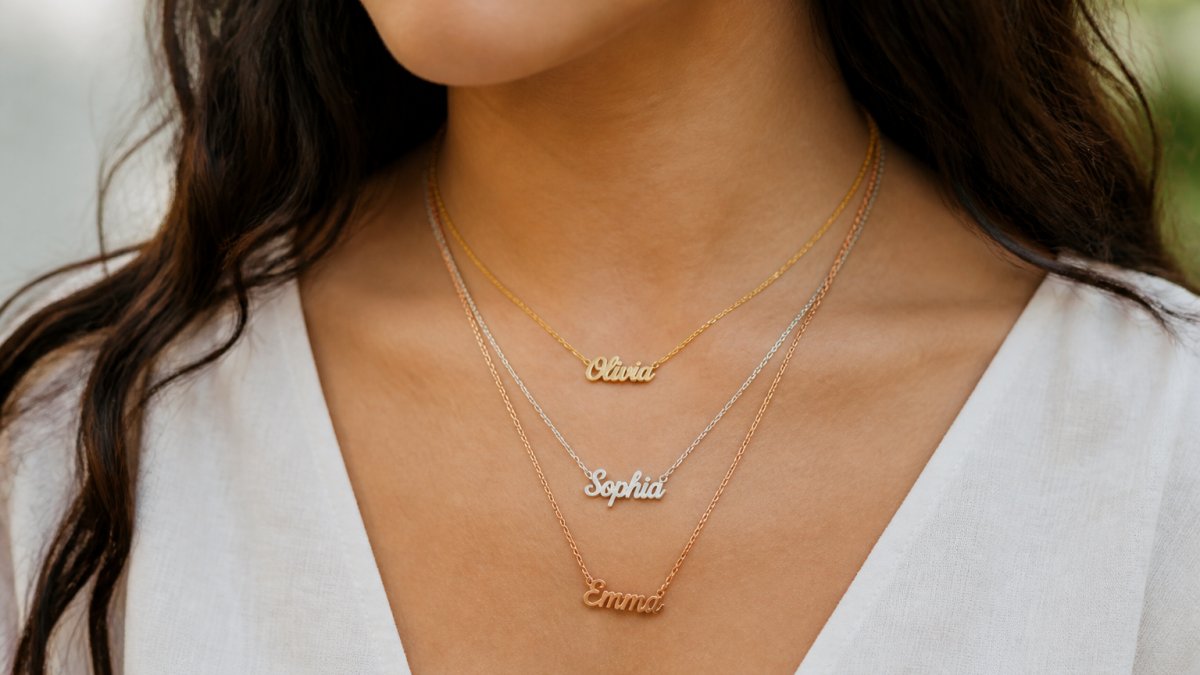
Layered Name Necklace Ideas and Styling Tips
Building a cohesive layered look requires more than just length. The style, metal, weight, and visual balance all matter. Here's how to create a stack that actually works.
Combining Nameplates with Plain Chains
Mix nameplate necklaces with simple chains to reduce visual clutter. If all three layers are personalized nameplates, the look becomes busy and hard to read. Instead, layer one or two name necklaces with plain delicate chains in between.
This approach lets each nameplate breathe. The plain chains act as spacers, drawing attention to the personalized pieces without competing for focus.
Example: 14-inch nameplate (your name) + 18-inch plain gold chain + 24-inch nameplate (partner's name). The middle plain chain separates the two nameplates visually and prevents them from fighting for attention.
Mixing Metals and Finishes for Visual Balance
Don't assume all your chains must match. Mixing gold, silver, and rose gold creates depth and modern style. The key is intentional contrast, not random mixing.
Choose one metal as your dominant metal (gold, for example) and let it appear in two of the three layers. Use a secondary metal (silver or rose gold) in one layer as an accent. This creates balance, enough variety to feel intentional, enough consistency to feel cohesive.
If one nameplate is in rose gold, echo that rose gold in another layer (perhaps a plain rose gold chain). This creates visual continuity without matching everything.
Avoid using three completely different metals. That reads as accidental rather than styled.
Matching Layers to Your Neckline and Body Type
The neckline you wear affects how layered name necklaces look. A high crew neck or turtleneck hides shorter layers, so longer chains work better. A deep V-neck shows all three layers clearly, so varied lengths become more important.
For petite frames, shorter overall lengths work better. A 14-18-24 inch stack might overwhelm a smaller person. Try 12-16-20 instead, keeping proportions in line with your body.
For larger frames, longer lengths create better proportion. A 16-20-28 inch stack gives presence without looking undersized.
Test your layered name necklaces with the outfits you wear most. Do they sit right with your everyday style? Do they complement your collarbone and neckline? Styling is personal, what works for someone else might not work for you.
Building Your Base Layer and Adding Depth
Your base layer is everything. It anchors the entire stack and determines how the other necklaces will sit.
Start with a 14-16 inch nameplate necklace as your foundation.
From there, add depth by introducing a mid-length layer. An 18-20 inch chain, nameplate or plain, creates the second visual tier.
Finally, add a longer 24-28 inch layer for dimension. This might be another nameplate or a simple chain with a small charm.
The progression creates rhythm. Your eye moves from the shortest layer to the longest, creating visual flow rather than chaos.
If you're building your first layered stack and learning how to layer multiple name necklaces together, start with just two layers. Master the combination, then add a third.
Care and Durability of Layered Name Necklaces
Layered name necklaces need intentional care to stay beautiful. Tangling, scratching, and metal fatigue happen faster when chains interact constantly.
Store them separately. Don't toss all three necklaces into one jewelry box. Use individual pouches or small boxes for each chain.
Clean gently. Use a soft cloth and mild soap. Avoid harsh chemicals or abrasive scrubbing, especially on delicate chains.
Inspect clasps regularly. The clasp takes stress when you layer multiple necklaces. Check it monthly for signs of wear.
Rotate your stack. Don't wear the same three necklaces every single day.
Avoid sleeping in layered necklaces. This is when most tangling happens.
Quality matters. Genuine metals like 14K gold or sterling silver hold up better than plated alternatives.
Layering multiple name necklaces together is a beautiful way to express love for the people closest to you. At Epic Gifts, we help you find the perfect personalized necklaces to build your meaningful stack, pieces designed to celebrate the names and people that matter most. Learn more about meaningful jewelry gift-giving to discover how personalized pieces become treasured keepsakes.
Frequently Asked Questions
What is the best way to keep layered name necklaces from tangling?
Start by choosing chains with different weights and textures so they don't cling together. Clasp each necklace individually and adjust the spacing so chains sit at least a quarter-inch apart at the collarbone. When storing, hang each nameplate necklace on a separate hook or in its own jewelry compartment. Before wearing, gently separate the layers and check that each chain lies flat. If tangling does occur, apply a small amount of baby powder or cornstarch between the chains to reduce friction, then carefully work them apart.
How do you know which necklace lengths work best for layering name necklaces?
The most popular combination is a 14-16 inch choker or collar necklace as your base, a 16-18 inch mid-length nameplate in the middle, and an 18-20 inch longer chain on top. This creates clear visual separation and prevents crowding at the collarbone. If you prefer a tighter stack, try 14, 16, and 18 inches. For a more dramatic effect, go 14, 17, and 20 inches. Always measure your personalized necklaces before purchasing to ensure they'll sit at different heights without overlapping.
Can you layer multiple name necklaces with different chain weights and styles?
Yes, mixing delicate and heavier chains actually prevents tangling and creates visual interest. Pair a delicate nameplate necklace with a slightly thicker plain chain, then add a third chain in a contrasting weight. Just avoid using chains with very similar textures or widths, as they're more likely to twist together. Mixing metals like gold and silver also adds dimension and helps each layer stand out as its own piece rather than appearing as one cluttered stack.
What should I consider when choosing name necklaces to layer together?
Select necklaces with meaningful names that matter to you or represent important people in your life. Ensure each nameplate is legible and sized appropriately so the names don't blur together visually when stacked. Consider the font style, metal finish, and pendant size of each piece. A good rule is to vary the pendant sizes slightly, so one nameplate is delicate, another is medium, and a third is slightly bolder. This creates balance and prevents your stack from looking monotonous or overly busy.


