


 support@epicgifts.org
Table of Contents
- Why Does Gold-Plated Jewelry Turn Skin Green
- What Causes the Green Discoloration on Your Skin
- Step-by-Step Methods to Clean Green Stains Off Skin
- Safe Household Items to Clean Jewelry and Skin
- How to Prevent Jewelry From Tarnishing and Staining
- When to Worry: Stain vs. Skin Irritation
- How Long Green Stains Last and When They Fade
- Frequently Asked Questions
Last Updated: October 16, 2026
Why Does Gold-Plated Jewelry Turn Skin Green
Understanding how to clean green stains off skin from jewelry starts with knowing why gold-plated pieces leave these marks in the first place, which happens because of what lies beneath the gold layer. Most affordable gold-plated pieces contain copper alloys as their base metal.
The process happens naturally over time. Sweat, moisture, and lotion create an acidic environment on your skin. This speeds up metal oxidation. Your skin's natural pH, combined with body chemistry, accelerates the reaction between copper and your skin's surface.
Metal Oxidation and Copper Alloys
Metal oxidation is the chemical process where copper and other metals lose electrons when exposed to oxygen and moisture. This creates copper compounds that stain your skin green.
Gold-plated jewelry uses copper alloys because copper is affordable and strong. Pure gold is too soft for everyday wear (Gold).
The thickness of the gold plating matters. Thicker plating lasts longer before the stain appears. Budget pieces often have minimal plating, so the green discoloration starts within weeks or months of wear.
How Sweat and Moisture Speed Up Discoloration
Your body naturally produces sweat, oils, and moisture. These fluids contain salt and acids that react with copper.
Lotions and skincare products are major culprits. They trap moisture against your skin and jewelry. Deodorant, perfume, and sunscreen also create a barrier that prevents the jewelry from drying out.
Wearing jewelry 24/7 without removing it increases the stain risk. Your skin never gets a chance to dry completely. The longer jewelry stays on damp skin, the faster the reaction occurs.
What Causes the Green Discoloration on Your Skin
The green mark on your skin is caused by copper compounds transferring from the jewelry to your skin surface. It's a harmless stain, not rust or corrosion. The green color comes from copper oxide and copper carbonate, natural byproducts of metal oxidation.
This discoloration is temporary. It washes away with soap and water. The stain does not indicate an infection or allergic reaction in most cases.
Step-by-Step Methods to Clean Green Stains Off Skin
Learning how to clean green stains off skin from jewelry is straightforward, with multiple household methods working effectively. Multiple household methods work effectively. Choose the approach based on how stubborn the stain is and what you have available at home.
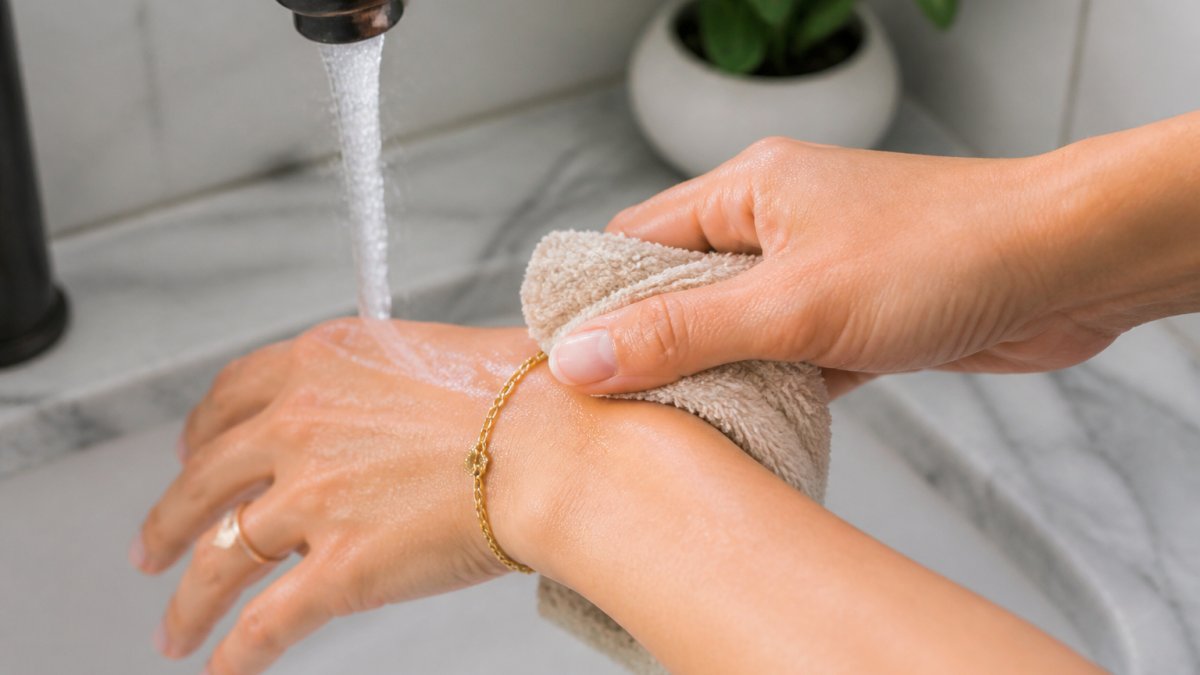
Method 1: Soap and Warm Water
This is the gentlest and most effective first step for most people.
- Wash your hands with mild soap and warm water
- Use a soft washcloth or cotton pad to gently rub the stained area
- Rinse thoroughly with lukewarm water
- Pat dry with a clean towel
The soap breaks down the copper compounds. Warm water helps loosen the stain. This method works best when done immediately after removing the jewelry. For fresh stains, soap and water remove the mark completely within one or two washings.
Method 2: Rubbing Alcohol or Makeup Remover
For stains that don't budge with soap, alcohol-based solutions work well.
- Apply rubbing alcohol to a cotton pad or soft cloth
- Gently rub the stained area in circular motions
- Let it sit for 30 seconds
- Rinse with warm water and pat dry
Makeup remover works similarly. Both contain solvents that dissolve copper compounds more effectively than soap alone. This method is safe for skin and removes stubborn stains quickly.
Test the alcohol on a small area first if you have sensitive skin. Some people experience mild dryness or irritation. If that happens, switch to baking soda or lemon juice instead.
Method 3: Baking Soda Paste
Baking soda is mildly abrasive and slightly alkaline, making it effective for stubborn marks.
- Mix baking soda with a small amount of water to form a thick paste
- Apply the paste directly to the stained area
- Gently rub with a soft cloth or soft toothbrush for 1-2 minutes
- Rinse thoroughly with warm water
- Dry completely
The paste gently exfoliates dead skin cells while neutralizing the copper compounds. This method is safe for all skin types and leaves skin feeling soft.
Method 4: Lemon Juice
Lemon juice contains citric acid, which breaks down copper compounds effectively.
- Cut a fresh lemon in half
- Rub the cut lemon directly on the stained area, or apply lemon juice with a cotton pad
- Let it sit for 1-2 minutes
- Rinse thoroughly with warm water
- Pat dry and apply moisturizer
The acid in lemon juice dissolves the stain quickly. This works especially well for older, set-in stains. However, lemon juice can dry out skin, so always follow up with a moisturizer.
Avoid lemon juice if you have cuts, scrapes, or very sensitive skin. The acid may cause stinging or irritation. For those cases, stick with soap, alcohol, or baking soda instead.
Safe Household Items to Clean Jewelry and Skin
Not all household products are safe to use on skin. Some solutions work for cleaning the jewelry itself but shouldn't touch your skin.
What Works and What to Avoid
Safe for skin:
- Mild soap (dish soap or hand soap)
- Warm water
- Rubbing alcohol (70% isopropyl)
- Makeup remover (alcohol or oil-based)
- Baking soda
- Lemon juice
- Soft washcloths and cotton pads
- Soft toothbrushes
Avoid on skin:
- Bleach or harsh chemicals
- Acetone or nail polish remover
- Abrasive scrubbing pads or steel wool
- Vinegar (too acidic for prolonged skin contact)
- Hot water (can irritate skin and open pores)
Safe for cleaning jewelry only:
- Vinegar and water solution
- Baking soda and water (for soaking)
- Soft toothbrush for gentle scrubbing
- Jewelry cleaning cloths
The key difference: your skin is delicate, so use gentle methods. Jewelry is durable, so you can use stronger solutions on it without worry.
How to Prevent Jewelry From Tarnishing and Staining
Prevention is easier than repeatedly removing stains. Simple habits keep your jewelry looking fresh and prevent green marks on your skin.
Clean Your Jewelry Regularly
Dirt, lotion, and sweat buildup accelerates tarnishing. Clean your jewelry weekly if you wear it daily.
- Use a soft, dry cloth to wipe jewelry after wearing it
- Once a week, wash with mild soap and warm water
- Use a soft toothbrush to gently clean crevices
- Dry completely before storing
- Store in a clean, dry place away from moisture
Regular cleaning removes the buildup that causes staining. This maintenance takes just a few minutes and extends the life of your pieces significantly.
Create a Moisture Barrier
Keeping moisture away from your skin and the jewelry's base metal prevents oxidation.
- Apply a thin coat of clear nail polish to the inside of rings and bracelets
- Let it dry completely before wearing
- Reapply every 2-3 weeks as it wears away
- Remove old polish with acetone before reapplying
The polish acts as a protective seal between the copper base and your skin. This is one of the most effective prevention methods for gold-plated jewelry.
Alternative barrier methods include wearing a thin cotton glove under jewelry or applying a waterproof barrier cream to your skin before putting on jewelry. These work but are less practical for daily wear.
Choose Higher-Quality Materials
The best long-term solution is investing in jewelry made from materials that don't cause staining.
Materials that resist green stains:
- Solid gold (10K or higher)
- Sterling silver
- Stainless steel
- Titanium
- Platinum
These materials don't oxidize the way copper does. They may tarnish slightly, but they won't leave green marks on your skin.
When you invest in durable jewelry, you avoid the constant cycle of staining and cleaning.
For budget-conscious shoppers, solid sterling silver offers excellent durability at a reasonable price. It's a middle ground between affordable gold-plated options and luxury materials.
When to Worry: Stain vs. Skin Irritation
Most green stains are harmless. However, some people experience actual skin irritation from jewelry metals.
Harmless staining shows:
- Green or gray discoloration only
- No itching, redness, or swelling
- Stain disappears completely with washing
- No pain or sensitivity
Contact dermatitis or metal allergy shows:
- Red, inflamed skin under the jewelry
- Itching or burning sensation
- Rash that spreads beyond where the jewelry touches
- Swelling or blistering
- Symptoms that persist even after removing the jewelry
If you experience irritation, remove the jewelry immediately. Wash the area with mild soap and cool water. Apply a fragrance-free moisturizer.
Nickel is the most common metal allergen. Many gold-plated pieces contain nickel in the alloy blend. If you have a known nickel allergy, avoid gold-plated jewelry entirely. Choose solid gold, sterling silver, or stainless steel instead.
How Long Green Stains Last and When They Fade
Green stains from jewelry fade gradually as your skin naturally sheds dead cells. The timeline depends on how deep the stain has set into your skin.
Fresh stains (worn for a few hours):
- Disappear within 1-2 washes with soap and water
- Usually gone within a few hours of removing the jewelry
Set-in stains (worn for days or weeks):
- May take 2-5 days to fade completely with regular washing
- Faster removal with alcohol, baking soda, or lemon juice
- Stain becomes lighter each day as skin cells turn over
Deep stains (worn constantly for weeks):
- Can take 1-2 weeks to fade completely
- Accelerated by daily washing and gentle exfoliation
- Using baking soda or lemon juice speeds up fading
Your skin naturally regenerates. The outermost layer of skin sheds every 2-4 weeks. This natural process removes the stained cells gradually.
The stain will not become permanent or cause lasting damage. Even if you do nothing, it will fade on its own within a few weeks.
Green stains from jewelry are a common annoyance, but they're entirely preventable and easily removable.
Frequently Asked Questions
How long does it take for green skin stains from jewelry to go away?
Green stains from jewelry typically fade within 24 to 48 hours on their own as your skin naturally sheds dead cells. Washing with soap and water speeds up removal to a few hours. Stubborn marks may take longer, but gentle cleaning methods like baking soda paste or rubbing alcohol can remove them within one washing session. If a stain persists beyond a few days or causes itching or rash, it may indicate contact dermatitis rather than simple discoloration.
Why does gold-plated jewelry turn skin green?
Gold-plated jewelry turns skin green because the base metal underneath, usually copper alloy, oxidizes when exposed to sweat, moisture, and lotion on your skin. Copper oxidation creates a greenish compound that transfers to your skin. The plating wears away over time, exposing the alloy beneath. This is harmless discoloration, not an allergic reaction, though sensitive skin may experience irritation if the metal continues to contact the skin directly.
Is the green stain from jewelry harmful to your skin?
The green stain itself is harmless, it's simply oxidized copper that rubs off onto your skin. However, if you experience itching, rash, or redness around the jewelry, you may have contact dermatitis or a metal allergy rather than just staining. Discontinue wearing the piece and consult a dermatologist if irritation persists. To avoid both staining and irritation, keep jewelry clean, dry it thoroughly after washing, and apply a moisture barrier like clear nail polish to the inside of the band.
What's the best way to prevent jewelry from tarnishing?
Prevent jewelry tarnishing by cleaning it regularly with mild soap and warm water, drying it completely, and removing it before swimming or heavy sweating. Store jewelry in a dry place, away from humidity. For gold-plated pieces, apply a thin coat of clear nail polish to the inside of the band to create a barrier between the alloy and your skin. Choose higher-quality jewelry with thicker plating or solid metals like sterling silver or 14K gold, which resist oxidation longer than thin-plated costume pieces.


