


 support@epicgifts.org
Table of Contents
- Why Personalization Matters Beyond Engraving
- DIY Personalized Gift Ideas You Can Create at Home
- Using Monograms and Initials for Subtle Personalization
- Handwritten Note Etiquette for Gifts
- Incorporating Birth Dates, Milestones, and Meaningful Dates
- The Role of Font Selection and Design in Personalization
- Creative Gift Wrapping Techniques and Presentation
- Personalizing for Specific Recipients
- Frequently Asked Questions
Last Updated: September 22, 2026
Why Personalization Matters Beyond Engraving
Personalization transforms an ordinary gift into something meaningful. Engraving is one option, but many gifts can't be engraved, and some people prefer subtler touches. Learning how to personalize a gift without engraving gives you dozens of ways, from handwritten notes to custom wrapping, that add genuine sentiment without altering the original item.
DIY Personalized Gift Ideas You Can Create at Home
DIY personalization gives you complete control over design, colors, and message, and lets you choose whether personalization is permanent or reversible.
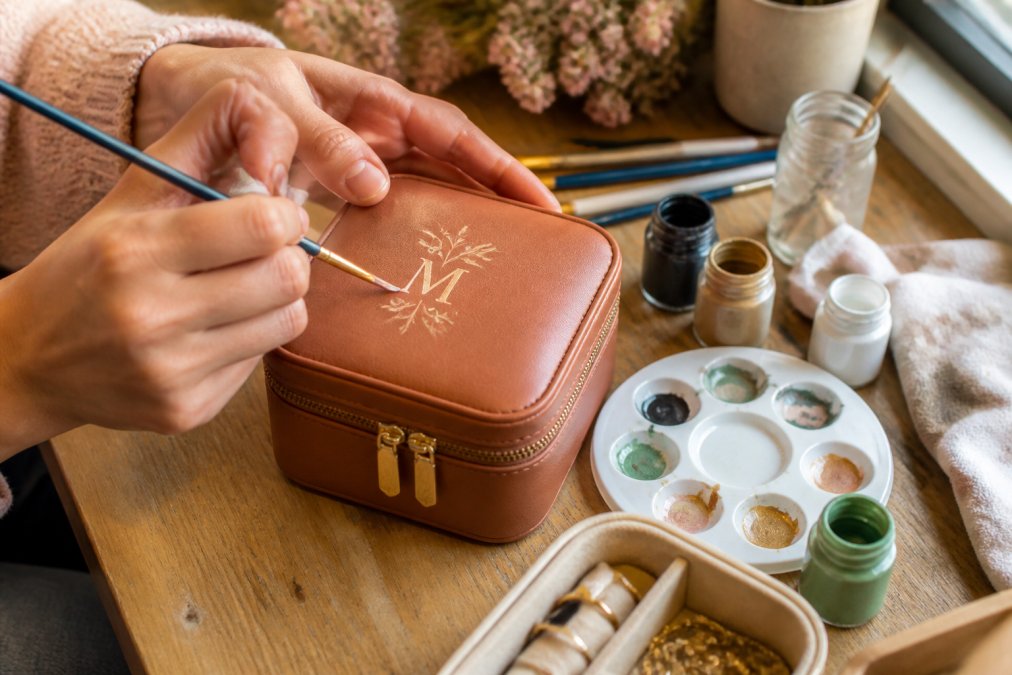
Hand-Painted and Hand-Written Techniques
Hand-painting adds a personal, artistic touch that no machine can replicate.
Hand-painted gift ideas and durability:
- Acrylic paint on leather or wood: Use artist-grade acrylic (brands like Liquitex or Golden work well). Apply 2-3 thin coats rather than one thick coat to prevent cracking. Seal with a matte or gloss varnish for protection. Durability: 3-5 years with light handling; fades with direct sunlight or frequent washing.
- Oil paint on ceramic or glass: Oil paint adheres better to non-porous surfaces and produces richer colors. Cure time is 24-48 hours. Not food-safe unless you use food-grade sealant. Durability: 5+ years; resistant to fading.
- Watercolor on paper or fabric: Delicate and artistic but fragile. Best for items that won't see heavy use (framed art, journal covers). Seal with fixative spray to reduce smudging. Durability: 2-3 years before noticeable fading.
- Fabric paint on textiles: Use paint formulated for fabric (Jacquard or Tulip brands). Heat-set with an iron after 24 hours to lock the color. Survives 20-30 wash cycles before fading. Durability: 1-2 years with regular washing.
Photo Transfer and Vinyl Decal Methods: Reversible vs. Permanent
Photo transfer (semi-permanent to permanent):
- Heat transfer paper method: Print your image on heat transfer paper (available at craft stores like Michaels or online). Apply heat (300-350°F) for 30-60 seconds using a heat press or household iron. Works on cotton, polyester, and some ceramics. Results last through 20-40 wash cycles before noticeable fading. Cost: $0.50-$2 per transfer.
- Mod Podge transfer (semi-permanent): Print image on regular paper, apply Mod Podge adhesive to the surface, place the image face-down, then wet and rub away the paper backing. The ink transfers to the surface. Works on wood, ceramic, and cardboard. Durability: 1-2 years; fades with sunlight. Cost: $5-$10 for supplies.
- Professional sublimation transfer (permanent): Requires specialized equipment. Ink bonds chemically to polyester and coated surfaces. Durability: 5+ years; fade-resistant. Cost: $15-$50 per item (outsourced).
Photo transfer requires patience to avoid bubbles and misalignment.
Vinyl decals (fully reversible): Vinyl decals offer precision without permanent damage. Clean the surface, apply transfer tape, position carefully, and burnish to adhere. Removal is simple: peel slowly at 45 degrees with no residue. Durability: 2-3 years outdoors; 5+ years indoors. Cost: $0.50-$3 DIY; $5-$15 custom. Limitation: works only on smooth surfaces.
Wax Seals and Custom Stamps: Non-Destructive Personalization
Wax seals:
- Melt sealing wax (available in dozens of colors) over a candle flame, pour onto the surface (paper, ribbon, or gift box), and press a custom seal stamp into the warm wax for 10-15 seconds.
- Cost: $15-$40 for a custom seal stamp; $10-$20 for wax supplies.
- Durability: Permanent once cooled, but can be carefully removed if needed (especially from paper or ribbon).
- Best for: Gift boxes, envelopes, ribbon, or the outside of wrapped packages. Adds a luxury, heirloom feel.
Custom stamps:
- Rubber or wooden stamps with initials, dates, or symbols. Apply with ink pads (fabric ink for textiles, regular ink for paper).
- Cost: $20-$50 for a custom rubber stamp; $5-$15 for ink pads.
- Durability: Depends on ink type. Fabric ink lasts through washing; paper ink fades with sunlight.
- Best for: Wrapping paper, gift tags, fabric items, or wooden boxes. Repeatable and consistent.
Using Monograms and Initials for Subtle Personalization
Monograms are elegant and understated. Traditional monograms place the last initial in the center, larger than the first and middle initials.
Monograms work on:
- Leather goods (wallets, belts, bags)
- Linens (handkerchiefs, pillowcases, blankets)
- Stationery and journals
- Cufflinks and accessories
- Picture frames and boxes
Handwritten Note Etiquette for Gifts
A handwritten note elevates any gift by explaining why you chose this particular item for this particular person.
What to Write and How to Present It
Keep the note brief, one or two paragraphs. Short notes feel genuine.
What to include:
- Why you chose this gift
- A specific memory or inside joke (if relevant)
- How you hope they'll use or enjoy it
- A closing that matches your relationship
Pairing Notes with Shared Memories and Inside Jokes
The most meaningful notes reference something only you and the recipient understand, a shared memory or inside joke. That moment of recognition makes the gift feel truly personal.
Incorporating Birth Dates, Milestones, and Meaningful Dates
Dates carry weight, a birth date, anniversary, or milestone. These can be woven into personalization subtly as meaningful acknowledgments.
The Role of Font Selection and Design in Personalization
Typography shapes how a gift feels. Script fonts feel elegant; sans-serif fonts feel modern; serif fonts feel traditional. Choose a font that matches the recipient's style. If personalizing multiple items as a set, use the same font for cohesion.
Creative Gift Wrapping Techniques and Presentation
How you wrap a gift is part of the gift itself. Research in gift-giving psychology shows that recipients perceive gifts wrapped with visible care and intention as more valuable and more personal, regardless of the item's actual cost.
Luxury Packaging and Unboxing Experience
Material choices and their psychological impact:
- Kraft paper with twine or ribbon: Signals thoughtfulness and restraint. Feels artisanal and intentional. Recipients perceive kraft-wrapped gifts as more personal than glossy paper, even when the item inside is identical. Cost: $0.50-$2 per gift.
- Luxury gift boxes with tissue paper: Creates anticipation through layers. The recipient must remove tissue paper to see the item, extending the unboxing moment. Signals that the gift is special enough to warrant a box. Cost: $3-$8 per box.
- Fabric wrapping (furoshiki-style): Japanese wrapping technique using cloth instead of paper. The cloth becomes a reusable gift itself. Signals sustainability and cultural thoughtfulness. Cost: $5-$15 per cloth (reusable for years).
- Layered wrapping with multiple textures: Combine kraft paper, tissue, ribbon, and natural elements. Each layer the recipient removes feels intentional. Cost: $2-$5 per gift.
- Minimalist wrapping (plain paper, no ribbon): Paradoxically, extreme simplicity also signals care, it suggests confidence in the gift itself. Recipients interpret this as "I don't need decoration to make this special." Cost: $0.25-$0.50 per gift.
Quality wrapping paper makes a difference. Thick, textured paper feels more substantial than thin, glossy paper, and matte finishes feel more sophisticated than shiny ones.
Adding Personal Touches to Wrapping and Ribbons: Non-Destructive Decoration
Small, thoughtful details transform standard wrapping into something memorable. Personal touches should enhance the gift without damaging it.
Personal wrapping touches (non-destructive):
- Handwritten gift tags: Use cardstock or kraft paper. Write a message or inside joke. Attach with twine or tape (not glued directly to the gift, so it can be removed). Cost: $0.25-$0.50 per tag.
- Pressed flowers or greenery: Tuck dried flowers, eucalyptus, or ferns under the ribbon. They add visual interest and a subtle fragrance. Sourcing: Dry flowers yourself (2-3 weeks) or purchase pre-dried from craft stores ($3-$8 per bundle). Cost: $0.50-$2 per gift.
- Wax seals with initials: Seal the ribbon or paper with a custom wax seal (see DIY section). Adds a luxury, heirloom touch. Cost: $0.50-$2 per seal (after initial stamp investment).
- Dried citrus slices or cinnamon sticks: Thread onto ribbon or tuck into the bow. Adds texture, fragrance, and a natural aesthetic. Cost: $0.50-$1.50 per gift (DIY) or $2-$4 (pre-made).
- Custom ribbon color: Choose a ribbon shade that matches the recipient's favorite color or the gift's aesthetic. Signals that you've thought about their preferences. Cost: $1-$3 per gift.
- Handwritten note visible on the outside: Write a short message directly on kraft paper or on a label affixed to the package. Signals that the gift is personal before opening. Cost: $0 (uses supplies you have).
Sustainable wrapping alternatives:
- Newspaper or comic pages: Wrap with sections of the recipient's favorite newspaper or comic strip. Personalized and recyclable. Cost: $0.
- Brown kraft paper with natural dyes: Use coffee, tea, or plant-based dyes to color kraft paper before wrapping. Creates unique, one-of-a-kind patterns. Cost: $1-$3 per gift.
- Reusable fabric bags: Wrap the gift in a cotton or linen bag the recipient can reuse for storage or future gifts. Embroider initials or a date on the bag for personalization. Cost: $5-$15 per bag (reusable indefinitely).
- Seed paper wrapping: Some craft suppliers sell seed paper that can be planted after use. Wrap with this and include a note explaining what will grow. Cost: $3-$8 per sheet.
- Upcycled materials: Wrap with fabric scraps, old maps, sheet music, or vintage book pages. Personalize by choosing materials that reflect the recipient's interests. Cost: $0-$2 per gift.
Personalizing for Specific Recipients
Different people respond to different kinds of personalization. A gift for a baby requires different thinking than a gift for a couple or for family members.
Gifts for Babies, Couples, and Family Members
Baby gifts call for soft, safe personalization, embroidered blankets with the baby's name, handwritten journals, or photo albums. Avoid choking hazards.
Frequently Asked Questions
What are the best ways to personalize a gift without engraving?
The most effective non-engraving methods include hand-painted initials, monograms applied through vinyl decals, handwritten notes paired with the gift, and incorporating meaningful dates or milestones into the gift's design or presentation. Photo transfers work well for items like leather goods or wooden boxes. Pairing any gift with a thoughtful handwritten note adds significant sentimental value. The best choice depends on the gift type and your recipient's aesthetic preferences.
How do I personalize jewelry without engraving?
For jewelry, consider monograms or initials on accompanying boxes or gift cards, handwritten notes that reference the piece's meaning, or selecting designs with birthstones or meaningful dates already incorporated. Some jewelry pieces feature subtle design elements like specific gemstones or metals that hold personal significance. Pairing the piece with luxury packaging and a heartfelt note creates a curated, bespoke feel without permanent markings on the jewelry itself.
Is a handwritten note better than engraving for personalizing a gift?
Both serve different purposes. Handwritten notes offer flexibility, you can adjust the message based on the occasion and recipient, and they feel intimate and genuine. Engraving is permanent and elegant but less personal in tone. Many people appreciate receiving both: a handwritten note for emotional connection and a subtle engraved element for lasting elegance. Notes work especially well when paired with quality packaging and presentation, creating a memorable unboxing experience.
What materials work best for DIY personalization techniques?
Leather, wood, fabric, and metal are ideal for DIY personalization. Leather accepts hand-painting and vinyl decals well. Wood can be hand-painted or stained with initials. Fabric items like scarves or tote bags work with fabric markers or embroidery. Metal items benefit from vinyl decals or careful hand-painting. Avoid glossy plastics unless using vinyl decals. Test any technique on a sample piece first, and use quality materials, genuine leather, quality paint, and durable vinyl, to ensure your personalization lasts.


