


 support@epicgifts.org
Table of Contents
- What You'll Need to Clean Engraved Jewelry
- Step-by-Step Process for Cleaning Custom Engraved Jewelry
- Best Jewelry Cleaning Solution for Engraved Items
- How to Remove Tarnish from Engraved Silver
- Cleaning Solutions and Tools to Avoid
- Jewelry Maintenance Tips for Custom Pieces
- When to Seek Professional Cleaning
- Conclusion
- Frequently Asked Questions
Last Updated: September 30, 2026
What You'll Need to Clean Engraved Jewelry
Cleaning custom engraved jewelry requires only basic supplies, no expensive equipment or harsh chemicals needed.
Here's what works best:
- Mild dish soap, the gentler the better
- Lukewarm water, never hot, which can damage some metals
- Soft-bristled toothbrush, essential for reaching engraved lettering without scratching
- Microfiber cloth, for drying and polishing without leaving lint
- Cotton swabs, for tight spaces in detailed engravings
- Small bowl, to hold your cleaning solution
That's all you need for routine maintenance. Simple supplies work better because they're gentler on delicate engravings and precious metals.
Step-by-Step Process for Cleaning Custom Engraved Jewelry
Step 1: Prepare Your Cleaning Station
Fill your small bowl with lukewarm water and add a few drops of mild dish soap, you want a gentle solution, not a soapy bath.
Lay out your microfiber cloth and cotton swabs nearby so you won't scramble mid-cleaning.
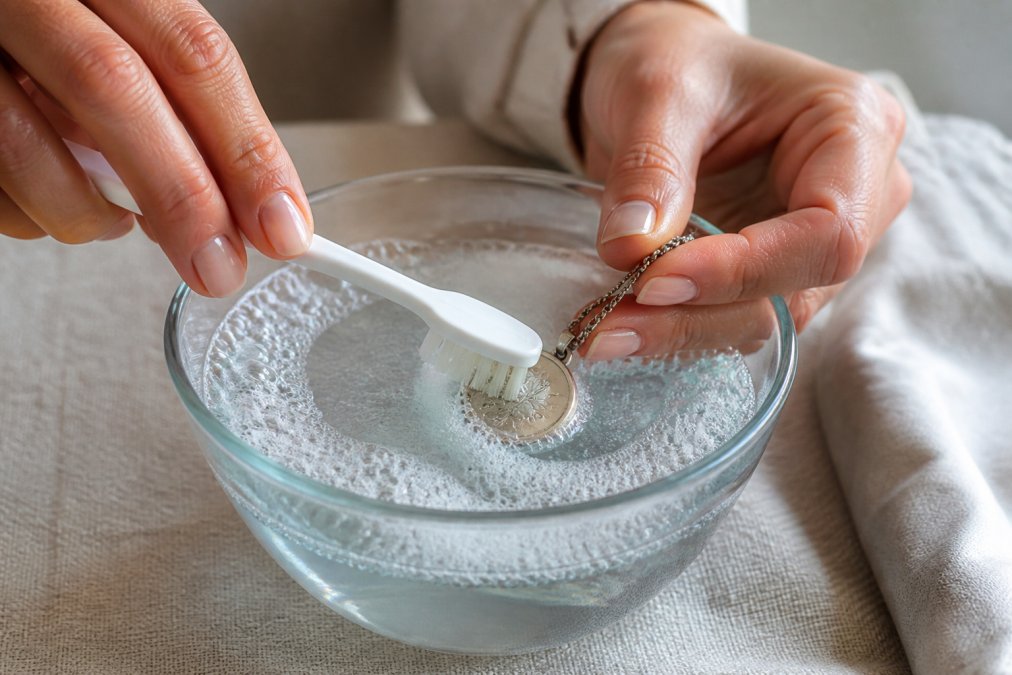
Step 2: Soak and Loosen Debris
Place your jewelry in the soapy water and let it sit for 2-3 minutes to loosen dirt and oils. Don't soak longer, extended soaking can weaken settings or cause oxidation.
Step 3: Gently Scrub Engraved Areas
Use your soft-bristled toothbrush to gently scrub engraved areas in small circular motions. This is the most important step for how to clean custom engraved jewelry because engravings trap residue that simple soaking won't remove.
For extremely fine details, use a cotton swab dampened in soapy water for precision control.
Step 4: Rinse and Dry Thoroughly
Rinse under lukewarm running water to remove soap residue and loosened particles. Pat dry immediately with your microfiber cloth, don't air dry, as water spots and oxidation can form.
Best Jewelry Cleaning Solution for Engraved Items
The best solution is mild dish soap and lukewarm water. Mild soap breaks down oils and residue without harsh chemicals, while lukewarm water loosens debris safely.
For routine cleaning of how to clean custom engraved jewelry, this basic solution handles everything.
How to Remove Tarnish from Engraved Silver
Tarnish is oxidation from sulfur compounds in air. For light tarnish, standard soap-and-water cleaning with gentle scrubbing removes it.
For heavier tarnish, make a paste of baking soda and water, apply with your soft toothbrush in circular motions, then rinse and dry immediately. This method works well for how to remove tarnish from engraved silver because baking soda is gentle enough for delicate engravings.
Never use aluminum foil or vinegar-based tarnish removal methods on engraved pieces. These can cause pitting in the grooves of your engravings and create permanent damage.
Cleaning Solutions and Tools to Avoid
Ultrasonic cleaners are dangerous for engraved jewelry. The 40,000+ cycles per second can loosen settings, dislodge engravings, trap cleaning solution in grooves, and cause micro-fractures in gemstones. Ask jewelers to hand-clean engraved pieces instead.
Abrasive cleaners and powders scratch metal and lodge particles in grooves where they oxidize and cause permanent discoloration. Sterling silver and gold are especially vulnerable.
Acidic solutions (vinegar, lemon juice, tarnish removers) etch into metal, creating permanent pitting in engraved grooves.
Jewelry Maintenance Tips for Custom Pieces
Regular maintenance prevents most cleaning problems before they start, but the right approach depends on your jewelry's material composition. Custom engraved pieces require additional care because engravings trap debris and oxidation more readily than smooth surfaces.
Understand your metal type and its oxidation risk.
Different metals tarnish and corrode at different rates:
- Sterling silver (92.5% silver) tarnishes quickly when exposed to sulfur compounds in air, humidity, and skin oils. Engravings on silver darken visibly in the grooves within weeks of exposure. Store sterling silver in airtight containers and clean every 2-3 weeks to prevent heavy tarnish buildup.
- Gold and gold-plated jewelry oxidizes slowly but can develop a dull patina over time. Plated jewelry is especially vulnerable because the plating layer is thin; exposure to moisture and chemicals can wear through the plating and expose the base metal underneath. Store gold-plated pieces in dry conditions and avoid prolonged contact with water or sweat.
- Stainless steel resists tarnish and oxidation far better than precious metals. It requires less frequent cleaning (every 4-6 weeks) and can tolerate more casual storage. However, stainless steel can still develop surface discoloration if exposed to chlorine or salt water for extended periods.
Store engraved jewelry to prevent surface scratches and oxidation.
-
Use individual soft pouches or lined compartments. Store each piece separately in a soft cloth pouch or a jewelry box with individual compartments lined with velvet or microfiber. This prevents engraved pieces from rubbing against other jewelry, which scratches the smooth surfaces between engravings.
-
Keep jewelry in cool, dry conditions. Humidity accelerates oxidation on silver and can cause moisture to accumulate in engraved grooves, leading to tarnish that's harder to remove. Avoid storing jewelry in bathrooms, basements, or any damp environment. A bedroom closet or dresser drawer is ideal.
-
Use anti-tarnish strips for silver. For sterling silver engraved pieces you wear infrequently, place an anti-tarnish strip (activated charcoal or silver-specific tarnish-prevention strips) in the storage container. These absorb sulfur compounds in the air and significantly slow tarnish formation. Replace strips every 3-6 months.
-
Avoid plastic bags or plastic-lined boxes. Plastic can trap moisture and off-gas chemicals that accelerate tarnish. Use cloth pouches or paper-lined boxes instead.
-
Worn frequently (2-3 times per week or more): Clean every 2 weeks with mild soap and water. Frequent wear exposes jewelry to skin oils, sweat, and environmental dust that accumulate quickly in engraved grooves.
-
Worn occasionally (weekly or less): Clean every 4 weeks. Less frequent exposure means slower buildup, but regular cleaning prevents tarnish from becoming heavy.
-
Stored most of the time (special occasions only): Clean before wearing and after wearing. This removes any dust or tarnish that formed during storage and prevents oils from the event from sitting in the engravings.
Avoid wearing during specific activities.
- Swimming and water exposure: Chlorine in pools and salt in ocean water accelerate corrosion and tarnish. Remove jewelry before swimming and rinse immediately if accidental exposure occurs.
- Showering and bathing: Hot water and soap residue can weaken settings and accelerate oxidation. Remove jewelry before bathing.
- Exercise and sweating: Sweat is acidic and contains salts that corrode metal and tarnish silver quickly. Remove jewelry before workouts.
- Applying lotions, perfumes, and cosmetics: These products leave residue that builds up in engraved grooves and can cause discoloration. Apply all cosmetics before putting on jewelry.
- Cleaning with harsh chemicals: Remove jewelry before using bleach, ammonia, or strong solvents. These chemicals can splash onto jewelry and cause permanent damage.
Inspect engravings regularly for trapped debris.
Dry immediately after any water exposure.
Handle with clean, dry hands.
When to Seek Professional Cleaning
Professional cleaning makes sense in specific situations. Knowing when to call a jeweler saves you from attempting repairs that require expertise.
Seek professional help when:
- Your jewelry has gemstones or pearls that need specialized care
- You notice loose settings or damaged prongs
- Tarnish is extremely heavy or won't respond to home cleaning
- Your piece has delicate gold plating that's wearing through
- You're unsure about the metal composition or care requirements
- The jewelry has intricate designs where you can't safely reach all areas
Conclusion
Cleaning custom engraved jewelry doesn't require special products or complicated techniques. Mild dish soap, lukewarm water, and a soft-bristled toothbrush handle everything routine maintenance demands. The key is gentleness, your engravings are delicate, and aggressive methods cause permanent damage.
Frequently Asked Questions
Can I use an ultrasonic cleaner on engraved jewelry?
Ultrasonic cleaners can damage delicate engravings by loosening the fine details or causing vibration-related wear. For custom engraved jewelry, hand cleaning with mild dish soap and a soft-bristled toothbrush is safer and more effective. Professional jewelers have specialized equipment, but home ultrasonic cleaners pose unnecessary risk to engraved lettering and intricate designs.
What's the safest way to clean personalized gold and silver jewelry?
Mix lukewarm water with a few drops of mild dish soap and soak your piece for 5-10 minutes. Use a soft-bristled toothbrush to gently scrub around engravings, then rinse thoroughly under running water. Pat dry immediately with a microfiber cloth and air dry completely before storing. Avoid abrasive cleaners, harsh chemicals, and excessive scrubbing that could wear down plating or scratch the metal.
How do I prevent dirt buildup in engraved lettering?
Store your custom jewelry in a dry, dust-free environment and clean it every 2-4 weeks depending on wear. After wearing, use a cotton swab slightly dampened with lukewarm soapy water to gently clean inside the engraved areas. Dry immediately with a soft cloth. Regular maintenance prevents residue and skin oils from accumulating in the fine lines, keeping engravings crisp and readable.
Can household items like baking soda damage engraved jewelry?
Avoid vinegar, lemon juice, and other acidic solutions as well, as they can cause oxidation or discoloration, especially on sterling silver and gold-plated pieces. Stick to mild dish soap and water, it's gentle, effective, and won't compromise the integrity of your custom engraved pieces.
Epic Gifts creates meaningful, heart-centered jewelry designed to celebrate the special people in your life. Our custom engraved pieces are crafted with materials like genuine leather and mineral crystal for lasting durability. Proper care keeps your gift looking beautiful for decades, making it a true token of your affection. Shop Now and discover jewelry that tells your story.


