


 support@epicgifts.org
Table of Contents
- Why Handwriting Jewelry Demands Special Care
- How to Clean Engraved Jewelry Without Damaging Delicate Details
- Preventing Tarnish on Sterling Silver Handwriting Pieces
- Best Storage for Personalized Jewelry to Prevent Damage
- Material-Specific Preservation Techniques
- Restoring Faded or Worn Handwriting Engravings
- When to Remove Your Handwriting Jewelry and Daily Wear Guidelines
- Frequently Asked Questions
Last Updated: September 28, 2026
Why Handwriting Jewelry Demands Special Care
Handwriting jewelry is fragile in ways that standard pieces aren't. The engraved script sits on the surface, exposed to air, moisture, and everyday contact. Unlike smooth metal, those delicate lines collect dirt, tarnish, and chemical residue. A single careless cleaning method can fade the handwriting permanently.
These pieces hold someone's actual writing, a parent's signature, a child's scrawl, words from someone no longer here. That's not just jewelry, it's a keepsake.
Most jewelry care guides treat all engravings the same, missing the specific vulnerabilities of handwritten engravings. Standard polishing compounds blur script, harsh cleaners strip protective coatings, and improper storage causes oxidation that darkens lettering.
This guide covers how to preserve handwriting jewelry for years without losing the delicate details that make it meaningful.
How to Clean Engraved Jewelry Without Damaging Delicate Details
Cleaning engraved jewelry requires a gentler approach than polishing smooth metal. The safest method is hand-cleaning with mild soap and soft materials to remove surface buildup without aggressive friction.
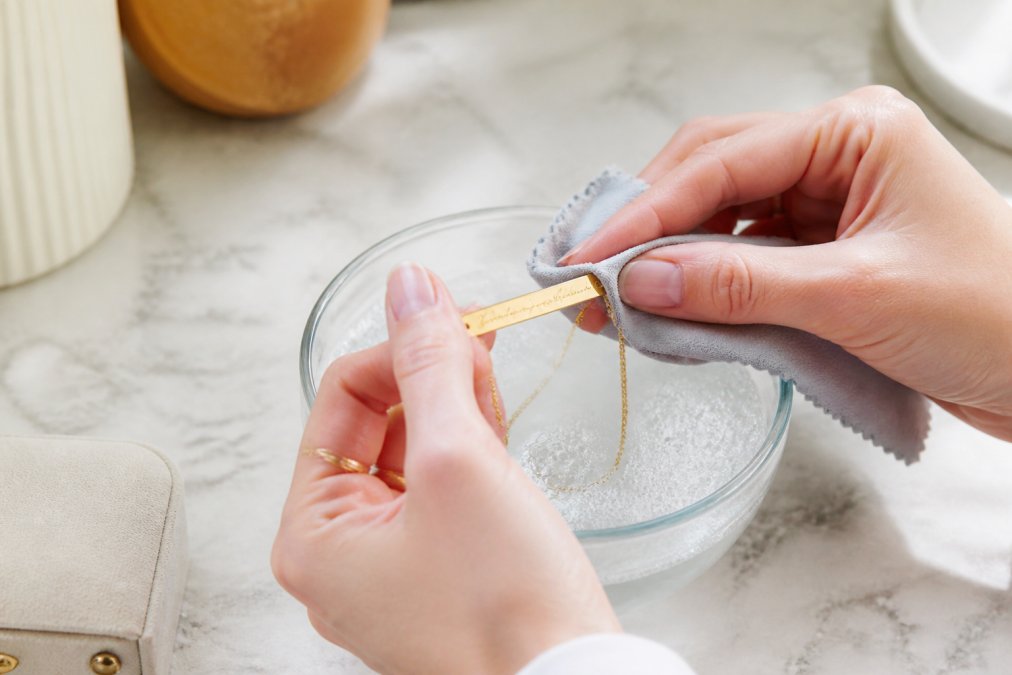
Gentle Hand-Cleaning Method for Handwritten Engravings
Start with warm water and a drop of dish soap. Use your fingers or a soft microfiber cloth to gently wipe the engraved surface. Move in the direction of the lettering, not against it. This prevents pushing dirt deeper into the script lines.
For stubborn spots, soak for 5-10 minutes in soapy water to loosen buildup, then wipe gently with the cloth.
Rinse thoroughly and pat dry immediately with a soft, lint-free cloth, moisture speeds tarnish formation.
Use a microfiber cloth, it's soft enough not to scratch and won't leave fibers or catch on delicate details.
Never use:
- Toothbrushes or hard-bristled brushes
- Paper towels or rough fabrics
- Abrasive polishing compounds
- Bleach or harsh chemicals
When to Use an Ultrasonic Cleaner (and When to Avoid It)
Ultrasonic cleaners vibrate at high frequencies to dislodge dirt but risk damaging delicate script lines, especially on older pieces or shallow hand-engraved work where depth varies.
For handwriting jewelry, hand-cleaning is the safer choice, it takes five minutes and protects what matters.
Preventing Tarnish on Sterling Silver Handwriting Pieces
Sterling silver tarnishes when it reacts with sulfur compounds in the air. Once tarnish builds up in script lines, it's harder to remove without risking the engraving. Prevention is far easier than restoration.
Understanding Oxidation and Tarnish Formation
Handwriting engravings tarnish faster because script lines trap moisture and air, creating micro-pockets where sulfur compounds accumulate. Temperature changes, humidity, and exposure to chemicals in lotions, perfumes, and cleaning products accelerate tarnish formation.
Chemical Reaction Prevention: Body Chemistry and Metal Interaction
Skin pH (typically 4.5-5.5, acidic) accelerates silver oxidation. Script lines trap acidic sweat and body oils, creating localized corrosion zones that match the engraving shape.
Lotions, perfumes, sunscreen, and hand sanitizers all accelerate tarnish. Remove handwriting jewelry before applying these products and wait 10-15 minutes after application before wearing the piece again.
Sweat is particularly corrosive to engraved silver because it contains lactic acid and salt, which accelerate oxidation and form crystals in engraved lines that are difficult to remove safely.
Protective Coatings and Prevention Strategies
A clear protective coating slows tarnish by creating a barrier between silver and air. Many pieces come with lacquer or resin coatings that last 1-2 years. Ask your jeweler about adding a protective layer; expect to reapply every 18-24 months if worn regularly.
Store the piece in an airtight container, the single most effective prevention method. Use anti-tarnish strips (activated charcoal or zeolite-based products) and replace every 3-4 months.
Keep the piece away from:
- Perfume and cologne (apply before wearing jewelry)
- Hand lotion and sunscreen (wait 15 minutes after application)
- Cleaning products containing bleach, ammonia, or sulfur-based compounds
- Humidity and temperature swings (avoid bathrooms and damp basements)
- Rubber bands and elastic materials (rubber releases sulfur compounds as it degrades)
Wear it regularly if you can, natural skin oils slow tarnish by creating a protective layer. The key is consistent, mindful wear with removal before showering or applying products.
Best Storage for Personalized Jewelry to Prevent Damage
How you store handwriting jewelry determines how long the engraving stays crisp and clear.
Creating an Airtight Storage Environment
An airtight container is non-negotiable for preservation. Plastic bags designed for jewelry work well. So do small glass jars with tight lids.
The goal is to exclude air and moisture.
Organizing Multiple Pieces Without Scratching Engravings
Keep multiple pieces separated in individual soft pouches (microfiber or velvet) to prevent scratching. Wrap delicate pieces in acid-free tissue paper. Never stack pieces directly. Label pouches to minimize container openings.
Material-Specific Preservation Techniques
Different metals require different care approaches. What works for solid gold can damage gold vermeil.
Gold Vermeil and Plated Handwriting Jewelry
Gold vermeil and plated jewelry have a gold layer over sterling silver that wears away with friction and harsh cleaning. Clean only with gentle hand-washing, store separately from solid metal, and remove before swimming, showering, or exercising. Prevention is far more cost-effective than replating.
Solid Gold and Precious Metal Care
Solid gold resists tarnish but still needs protection from scratches and dust in script lines. Clean with gentle hand-washing and store in an airtight container. Solid gold can handle frequent wearing but avoid harsh chemicals and extreme temperature changes.
Restoring Faded or Worn Handwriting Engravings
Sometimes handwriting engravings fade from years of wear, oxidation, or improper cleaning. The script becomes harder to read. Understanding what caused the fading and which restoration methods are viable will help you decide whether to restore or preserve the piece as-is.
What Causes Handwriting Engravings to Fade
Fading occurs through several mechanisms:
Fading occurs through tarnish buildup (reversible), metal erosion from harsh cleaning (permanent), chemical corrosion from chlorine or salt water, friction wear from skin and clothing contact, and shallow original engraving (0.3-0.5 mm depth).
Assessment: Can Your Engraving Be Restored?
Before pursuing restoration, determine the cause and depth of the fading.
Restoration Methods and Trade-Offs
Professional hand-polishing ($30-$75) is the safest method for tarnish buildup but will gradually wear the engraving with repeated polishing. Replating ($75-$200) restores appearance on plated pieces but doesn't restore lost metal from the engraving. Re-engraving ($50-$150) deepens lines but changes the hand-drawn character to a more uniform look. Laser re-engraving ($75-$200) is precise but creates sharper, more uniform edges than the original.
When Restoration Is Worth Pursuing
Restore the engraving if:
- The fading is primarily tarnish buildup (professional polishing will restore clarity at low cost and low risk)
- The piece is worn daily and you want to enjoy reading the handwriting clearly
- The engraving is deep enough that polishing won't compromise the detail (ask the jeweler to confirm)
- The emotional significance of the piece justifies the cost
Do not restore if:
- The engraving is very shallow and metal erosion is visible (polishing may do more harm than good)
- The original hand-drawn quality is important to you and you're considering re-engraving (the restored piece will look different)
- You can preserve the piece by improving storage and wear habits instead (prevention is always preferable)
Prevention Is Stronger Than Restoration
The best approach is prevention. Protect the engraving now so you don't face this choice later. Proper storage, gentle cleaning, and mindful wear will keep handwriting jewelry legible for decades without restoration.
When to Remove Your Handwriting Jewelry and Daily Wear Guidelines
Handwriting jewelry is precious, but it's also meant to be worn. The question is when to remove it for protection.
Take off handwriting jewelry before:
- Showering or bathing
- Swimming or water activities
- Exercising or sports
- Cleaning or using harsh chemicals
- Applying lotion, perfume, or sunscreen
- Sleeping (optional, but reduces wear)
| Preservation Task | Method | Frequency |
|---|---|---|
| Cleaning | Gentle hand-wash with mild soap and microfiber cloth | Weekly if worn daily |
| Tarnish prevention | Store in airtight container with silica gel | Ongoing |
| Protective coating | Apply or maintain lacquer/resin seal | Every 1-2 years |
| Inspection | Check for fading, damage, or wear | Monthly |
| Professional cleaning | Jeweler polishing (if needed) | As needed |
Frequently Asked Questions
How do I know if my handwriting jewelry is made from a material that will last?
Look for solid precious metals like sterling silver, 14K gold, or gold vermeil rather than plated options. Sterling silver and solid gold develop character over time but resist major deterioration when properly maintained. Gold vermeil (gold plating over sterling silver) offers an affordable middle ground, though the plating will eventually wear with daily use. Check your piece's documentation or contact the maker to confirm the exact metal composition before choosing your preservation strategy.
Can I wear my handwriting jewelry in the shower or pool?
Remove handwriting jewelry before showering, swimming, or exposing it to chlorine or salt water. Moisture accelerates tarnish on sterling silver and can damage protective coatings on gold vermeil. Soap residue and chemicals from pools or hot tubs cause oxidation and may fade delicate engravings over time. Store your piece in a dry location while bathing or swimming, and rinse it with fresh water immediately if accidental exposure occurs.
What's the fastest way to restore a faded handwriting engraving?
Professional jewelers can re-engrave or re-laser your piece to restore sharp, readable script. This works best for deeper engravings that have worn shallow from years of wear. For minor fading, gentle polishing with a microfiber cloth may improve visibility without permanent alteration. If your piece has sentimental value and you're hesitant about re-engraving, ask a professional jeweler to assess whether the original engraving can be safely deepened or if a new pass is necessary.
How often should I professionally clean my handwriting jewelry?
Have your piece professionally cleaned once every 1-2 years if worn daily, or every 2-3 years if worn occasionally. Professional cleaning removes buildup that hand-cleaning cannot, and jewelers can inspect for loose settings or damage. Between professional cleanings, hand-wash your jewelry monthly with mild soap and warm water, then dry thoroughly with a microfiber cloth. This routine prevents heavy tarnish accumulation and keeps your handwritten engraving visible and protected.


