


 support@epicgifts.org
Table of Contents
- What Is Rhodium Plating and How Long Does Rhodium Plating Last?
- Factors That Affect Rhodium Plating Lifespan
- Signs Rhodium Plating Is Wearing Off
- How to Care for Rhodium Plated Jewelry
- Rhodium Plating Cost and Replating Options
- Professional Replating vs. DIY Maintenance
- Frequently Asked Questions
Last Updated: September 18, 2026
What Is Rhodium Plating and How Long Does Rhodium Plating Last?
Rhodium plating is a thin protective coating of rhodium metal applied to jewelry through electroplating. This precious metal layer sits on top of base metals or other jewelry materials to enhance appearance and prevent tarnish. The question of how long does rhodium plating last depends on several factors, but most rhodium-plated jewelry maintains its bright, white finish for 1 to 3 years with normal wear.
At Epic Gifts, we understand that meaningful jewelry should maintain its beauty for years to come. Rhodium plating serves an important purpose: it keeps white gold, silver, and other metals looking lustrous and prevents oxidation that would otherwise dull the surface over time.
The lifespan of rhodium plating varies significantly. Some pieces retain their coating for just a few months with heavy daily use, while others remain protected for several years. Understanding what affects this durability helps you care for your jewelry properly and know when replating becomes necessary.
Factors That Affect Rhodium Plating Lifespan
Several key factors determine how long your rhodium-plated jewelry will maintain its protective coating and bright appearance.
Plating Thickness and Quality
The thickness of the rhodium layer directly impacts how long it lasts. Professional jewelers apply rhodium in layers measured in microns. Thicker applications provide longer protection, typically lasting 2 to 3 years or more. Thinner coatings may wear through in 6 to 12 months.
Quality matters significantly. High-quality rhodium plating uses proper electroplating techniques and consistent current density to create an even, durable coating. Poor-quality plating may be uneven or brittle, leading to faster deterioration. When you purchase jewelry, ask about the plating thickness if possible. Reputable jewelers can specify this detail.
The base metal underneath also affects longevity. Rhodium plating over sterling silver or white gold provides better adhesion than plating over lower-quality base metals. Better adhesion means the coating stays attached longer.
Daily Wear and Activity Level
How you wear your jewelry determines how quickly the rhodium coating abrades. Rings worn during daily activities experience constant friction against skin, clothing, and surfaces. This abrasion gradually removes the protective layer.
Active lifestyles accelerate wear significantly. If you wear your ring while exercising, gardening, or doing manual work, expect the plating to wear faster. Jewelry worn occasionally for special occasions can last much longer, sometimes 3 to 5 years or more.
Consider your routine:
- Office workers with minimal hand contact see slower wear
- Active individuals who use their hands constantly experience faster deterioration
- Athletes or outdoor enthusiasts should expect replating sooner
- People who remove jewelry during activities preserve the coating longer
Chemical Exposure and Environmental Factors
Exposure to harsh chemicals accelerates corrosion and plating wear. Chlorine in swimming pools, salt water at the beach, and cleaning products all damage rhodium coatings. Even perspiration contains salts and acids that can corrode the protective layer over time.
Environmental humidity and temperature fluctuations also play a role. High humidity promotes oxidation of the base metal beneath the plating. Temperature changes can cause expansion and contraction, which stresses the coating and may cause it to crack or peel.
Storage conditions matter too. Jewelry kept in humid environments deteriorates faster than pieces stored in dry conditions. Air exposure alone causes slow oxidation, but moisture accelerates the process significantly.
Signs Rhodium Plating Is Wearing Off
Recognizing when your rhodium plating needs renewal helps you maintain your jewelry's appearance and prevent base metal exposure. Wear progresses in predictable stages, and identifying your jewelry's current stage tells you how much time remains before replating becomes necessary.
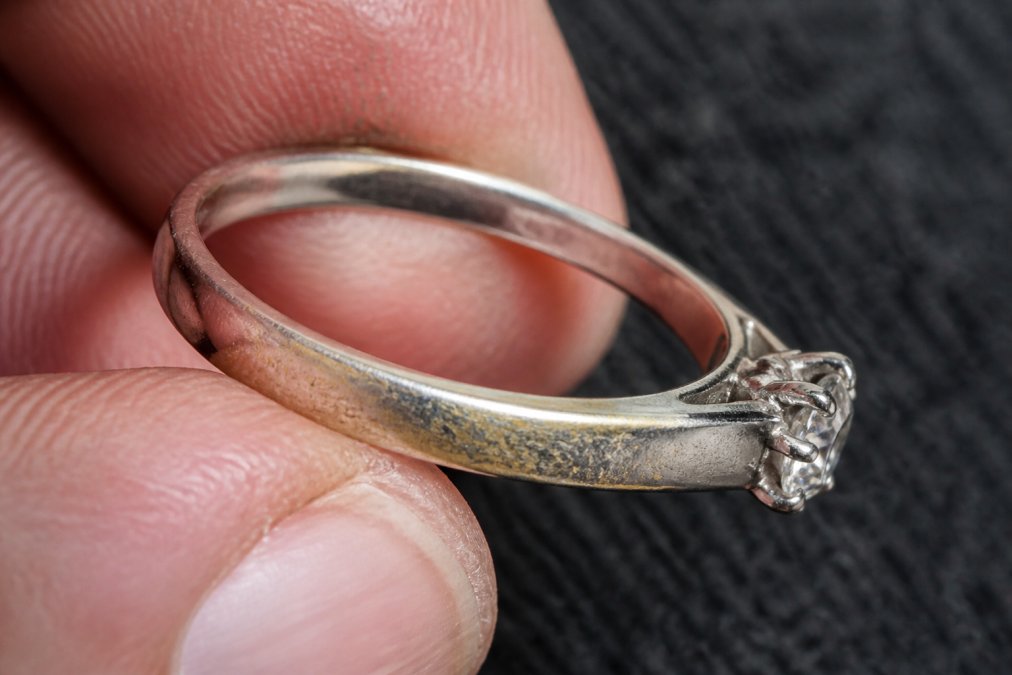
Stage 1: Early Wear (Months 1-6)
The first signs of wear are subtle and easy to miss. Dull patches appear on high-contact areas, typically the inner shank of a ring where it contacts skin constantly, or the clasp of a bracelet. These areas show reduced luster compared to fully coated sections; the metal looks matte rather than bright and reflective. Under direct light, you may notice the shine is less mirror-like than when the piece was new.
At this stage, the rhodium layer is still largely intact, but friction has begun wearing away the outermost microns. The coating feels smooth to the touch. This stage is most noticeable on pieces worn daily during active work or exercise; office workers may not observe this stage at all if wear is very gradual.
Stage 2: Visible Wear Patterns (Months 6-18)
As wear progresses, distinct patterns emerge on areas of highest contact. Ring shanks develop a visible band of dullness that corresponds to where the ring contacts the finger. Bracelet clasps show yellowing or browning as the base metal begins showing through. Pendant undersides and bail areas (where the pendant hangs from the chain) show wear first because they contact skin and clothing constantly.
Yellowing becomes visible during this stage, particularly on white gold pieces. White gold's natural pale yellow tone shows through as the rhodium thins. The yellowing typically appears first in high-wear zones and gradually spreads to less-contacted areas. This is the ideal time to schedule replating; the base metal is not yet significantly exposed, and replating will restore the piece to like-new condition.
For daily-wear rings, this stage typically occurs around 12-18 months. For occasional-wear pieces, this stage may not appear for 2-3 years.
Stage 3: Advanced Wear (Months 18-36)
By this stage, yellowing is obvious and covers most high-contact areas. The contrast between worn and unworn sections becomes stark. Rough or pitted texture may develop as you run your finger across the surface; healthy rhodium plating feels completely smooth, but worn plating feels slightly rough or textured as the underlying metal becomes exposed.
The base metal may show slight discoloration or tarnishing in worn areas. On sterling silver pieces, you may see dark tarnish spots appearing in addition to yellowing. These spots indicate that the base metal is oxidizing and the protective coating is nearly gone.
At this stage, replating is urgent if you want to prevent further deterioration. Continued wear without replating allows moisture to reach the base metal, which can lead to pitting or permanent damage that affects the jewelry's structural integrity.
Stage 4: Critical Wear (Beyond 36 Months)
The rhodium layer is largely gone. The piece looks noticeably yellowed or tarnished overall, not just in wear zones. The base metal may show pitting, small divots or rough spots where corrosion has begun. The jewelry may feel rough across most surfaces.
At this stage, replating is essential to prevent permanent damage. Continued wear without replating risks structural weakening, especially on rings or bracelets that experience constant flexing.
Wear Progression by Lifestyle
How quickly your jewelry progresses through these stages depends heavily on activity level:
Office Workers and Light-Use Wearers: Expect Stage 1 signs around 12-18 months, Stage 2 around 24-36 months. Replating may not be necessary for 3-5 years if wear is very light.
Active Individuals (Gym-Goers, Manual Labor, Outdoor Work): Expect Stage 1 around 3-6 months, Stage 2 around 6-12 months. Replating is typically needed annually or every 18 months.
Athletes and High-Contact Professions (Healthcare Workers, Mechanics): Expect Stage 1 within weeks, Stage 2 within 3-6 months.
When to Schedule Replating
The ideal time to replicate is during Stage 2, when yellowing is visible but the base metal is not yet significantly compromised. Waiting until Stage 3 or 4 may require additional restoration work if pitting or tarnishing has occurred, potentially increasing cost and turnaround time.
How to Care for Rhodium Plated Jewelry
Proper maintenance extends the life of your rhodium plating significantly. Simple daily practices prevent premature wear and keep your jewelry looking brilliant.
Daily Cleaning and Storage
Clean your jewelry regularly with mild soap and warm water. Use a soft cloth or soft-bristled brush to gently remove dirt and oils. This prevents buildup that can trap moisture against the metal.
Remove jewelry before:
- Swimming or bathing
- Exercising or activities that cause sweating
- Cleaning with harsh chemicals
- Gardening or outdoor work
- Sleeping, which can cause pressure wear
What to Avoid
Certain activities and substances damage rhodium plating quickly. Understanding what to avoid helps preserve your jewelry's finish.
Rhodium Plating Cost and Replating Options
Understanding replating costs helps you budget for jewelry maintenance. Professional replating is the most reliable way to restore a worn finish.
Professional Replating vs. DIY Maintenance
The choice between professional replating and DIY care depends on your situation and jewelry value.
A practical approach combines both methods:
- Use DIY care daily to maintain your jewelry
- Have pieces professionally replated every 2 to 3 years
- Store jewelry properly to minimize wear between replating
Frequently Asked Questions
How long does rhodium plating typically last on jewelry?
Rhodium plating typically lasts 1-3 years with regular wear, though this varies widely. Jewelry worn daily, like engagement rings, may show wear within 12-18 months. Pieces worn occasionally can last 3-5 years or longer. Factors like plating thickness, your activity level, and how well you maintain the piece all influence how long the protective coating remains intact before yellowing or tarnish becomes visible.
What are the main signs that rhodium plating is wearing off?
The most obvious sign is yellowing or a dull appearance on white gold or sterling silver jewelry, as the base metal shows through. You may notice visible wear on high-contact areas like the shank of a ring. Tarnishing or discoloration that doesn't polish away easily also indicates the plating has worn thin. If your jewelry loses its bright, mirror-like luster and takes on a darker or warmer tone, replating may be needed soon.
How should I care for rhodium plated jewelry to extend its lifespan?
Store your jewelry in a dry, cool place away from moisture and humidity. Clean it gently with a soft cloth and mild soap and water, avoid harsh chemicals, chlorine, and abrasive cleaners. Remove rhodium plated pieces before swimming, exercising, or doing household chores. Limit exposure to perfume, lotions, and cosmetics. Handle with care to minimize scratching and abrasion. These simple steps can significantly extend the life of your plating and keep your pieces looking beautiful.
What factors most affect how long rhodium plating lasts?
Plating thickness is critical, thicker plating lasts longer than thin coatings. Your lifestyle matters too: daily wear, physical activity, and frequent hand washing speed up wear. Chemical exposure from chlorine, perfume, and harsh soaps accelerates tarnish and corrosion. The base metal underneath also plays a role; sterling silver and white gold interact differently with the rhodium bath and surrounding environment. High-contact areas like ring shanks wear faster than low-contact surfaces like pendant backs.


