


 support@epicgifts.org
Table of Contents
- What Makes Jewelry Investment-Grade
- How to Evaluate Jewelry Quality Before You Buy
- Fine Jewelry Resale Value: What You Actually Get Back
- Sentimental Value vs Financial Investment
- The Hidden Costs: Appraisals, Insurance, and Taxes
- How to Sell or Liquidate Jewelry: Platforms and Logistics
- A Balanced Review: When Jewelry Works as a Gift and When It Does Not
- Frequently Asked Questions
Last Updated: September 13, 2026
What Makes Jewelry Investment-Grade
The short answer: very little jewelry qualifies as a true investment, and most pieces sold as "investment-grade" are better understood as gifts that hold some value. Investment-grade jewelry, typically high-carat precious metals, certified diamonds of significant size and quality, and signed pieces from established houses, has materials, craftsmanship, and provenance strong enough to retain meaningful resale value. At Epic Gifts, we think the honest framing matters more than the sales pitch.
So is high quality jewelry a good investment gift? It can be a wonderful gift with modest value retention, but it rarely performs like a financial asset. Anyone asking is high quality jewelry a good investment gift should start with that reality.
The 2:1:1 Rule and Other Quality Benchmarks
A useful benchmark is the 2:1:1 rule: aim for at least 2 carats of gold purity above 14K, 1 carat of genuine gemstone weight, and 1 hallmark or certification. It is not a law, just a screening tool. The FTC Jewelry Guides on marking and quality claims set the standards sellers must meet when describing precious metal content.
How to Evaluate Jewelry Quality Before You Buy
Evaluating jewelry quality means checking four things in order: metal purity, stone quality, construction, and documentation. Get these right and you avoid the most common expensive mistakes.
Work through this checklist before any purchase:
- Confirm metal purity (14K, 18K, platinum) stamped on the piece
- Ask for the stone's grading report from a recognized lab
- Inspect the setting for loose prongs or thin metal
- Verify the hallmark and maker's mark
- Request the original receipt and provenance paperwork
A common mistake is trusting a store's verbal description over the paperwork, the paperwork is what your insurer and any future buyer will ask for.
Certification, Hallmarks, and Provenance
Certification is a grading report from an independent lab confirming a stone's carat weight, cut, color, and clarity. Hallmarks are stamped marks indicating metal purity and maker. Provenance is the documented history of a piece. Together these three determine how much a buyer trusts what they are getting.
The GIA guidance on diamond grading reports explains why an independent report carries more weight than an in-store appraisal.
Fine Jewelry Resale Value: What You Actually Get Back
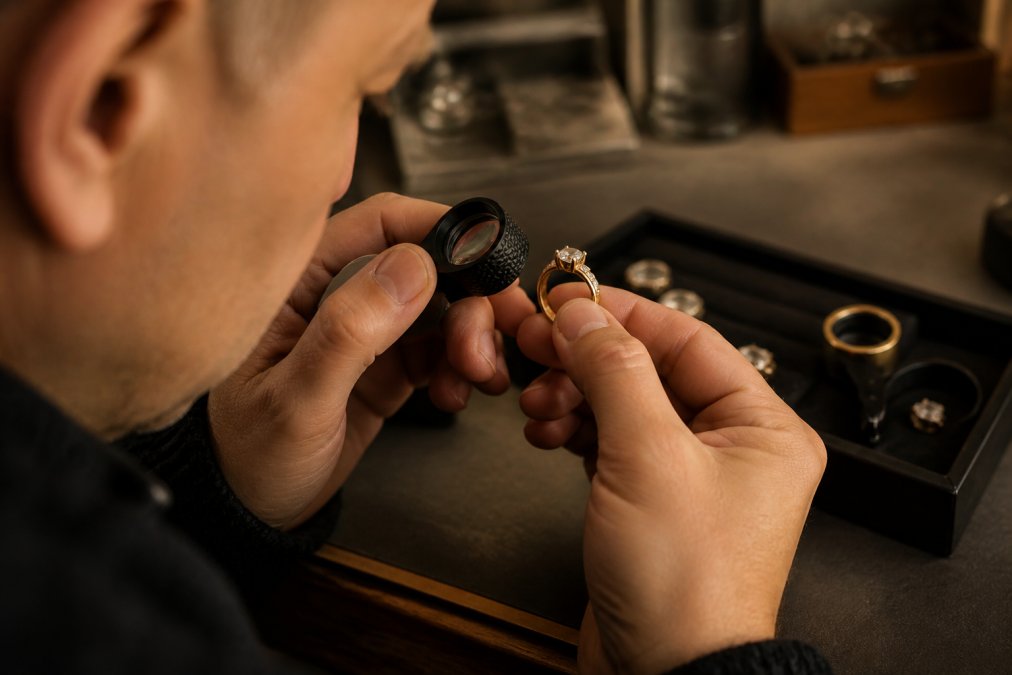
Fine jewelry resale value is typically far below retail. Most pieces resell for a fraction of what was paid, because retail prices bundle design, branding, and store overhead that disappear the moment you walk out. Precious metals hold value by weight; gemstones depend on rarity and demand.
The Retail Markup Reality
The markup reality is the single biggest reason jewelry underperforms as an investment. When you buy at retail, you pay for the setting, the brand, the salesperson, and the storefront; a resale buyer pays only for the metal and the stone. That gap is not a scam; it is how retail works. Expect to recover a modest share of the retail price, and treat any appreciation as a bonus rather than a plan.
Sentimental Value vs Financial Investment
Sentimental value and financial value are different currencies, and jewelry usually pays in the first. A piece worn daily, remembered at anniversaries, and passed down carries worth no resale price captures, for most gift-givers, that is the whole point.
Where jewelry does work as a financial asset is narrow: high-carat gold, certified diamonds of significant size, signed pieces from established houses, and rare colored stones. For everything else, buy it because you love it, not because you expect a return.
The Hidden Costs: Appraisals, Insurance, and Taxes
Owning valuable jewelry carries ongoing costs most buyers never calculate: appraisals must be refreshed, insurance premiums are billed every year, and selling at a gain can trigger capital gains tax. Because these costs recur, they compound against you the longer you hold.
What Each Cost Actually Looks Like
| Cost | What It Covers | Typical Frequency | How It Is Priced |
|---|---|---|---|
| Appraisal | Documented replacement value for insurance and resale | Every 2-3 years, or after any major market shift | Flat fee per piece, often scaled to stated value |
| Insurance | Loss, theft, damage, and sometimes mysterious disappearance | Annual premium, billed monthly or yearly | Usually a rate per $100 of insured value, set by the carrier |
| Capital gains tax | Profit on sale above your cost basis | At time of sale | Taxed at the collectibles rate rather than the standard long-term rate |
| Storage and security | Safe, vault, or rider requirements | Ongoing | Varies widely; often bundled into a homeowner's rider |
A piece bought as a gift and worn regularly is often insured under a homeowner's or renter's policy rider rather than a standalone jewelry policy. Riders are cheaper but narrower, they often exclude mysterious disappearance, the polite term for "it vanished and you cannot prove how." A standalone policy costs more and covers more.
The Appraisal Trap
An appraisal is not a valuation of what you could sell the piece for; it is what it would cost to replace the piece at retail. Those two numbers can be far apart, and confusing them is the single most common mistake in this category. Insure at replacement value and then try to sell, and you will discover the resale number is lower, sometimes much lower.
A common mistake is insuring a piece at purchase price and never updating the appraisal. If metal or stone values shift, you may be underinsured at claim time, and the carrier will pay the documented value, not what you think the piece is worth. Refresh the appraisal on your carrier's schedule, and keep the receipt, it is a cost of ownership, not a one-time fee.
The Tax Reality Most Guides Skip
Gains on jewelry sales are generally treated as gains on collectibles, taxed at a higher rate than ordinary long-term capital gains on stocks. That single fact is the biggest structural difference between jewelry and a brokerage account, and it is why jewelry is a weak tax-efficiency play even when it appreciates. Personal-use property losses are generally not deductible, so a piece that drops in value gives you no offsetting write-off.
The IRS guidance on capital gains and personal property explains how gains on collectibles are treated and why the rate differs from standard long-term gains. Before selling anything with a meaningful gain, confirm your cost basis, the original receipt, the appraisal at purchase, and any documentation of improvements all matter.
The Break-Even Math
Put the three costs together and the picture is clear. If a piece appreciates modestly but you pay for appraisals every few years, insurance every year, and collectibles-rate tax on the gain, the net return can be flat or negative even in a rising market. That is not an argument against buying jewelry as a gift, it is an argument against counting it as an investment.
How to Sell or Liquidate Jewelry: Platforms and Logistics
Selling jewelry means choosing between speed and price, and the channel you pick determines both. Here is the practical map.
The Channels, Ranked by Speed and Return
| Channel | Speed | Typical Return | Best For | Main Risk |
|---|---|---|---|---|
| Pawn shop / cash-for-gold | Same day | Lowest, often metal weight only | Urgent cash, low-value pieces | Stones frequently ignored or undervalued |
| Consignment shop | Weeks to months | Mid, seller keeps a percentage | Wearable pieces with brand appeal | You wait, and you may get the piece back |
| Online marketplace | Days to weeks | Mid to high, buyer-dependent | Documented, photographed pieces | Shipping risk, returns, fraud |
| Auction house | One to several months | Highest for rare or signed pieces | High-value, authenticated, provenance-rich items | Seller's premium and commission reduce the headline number |
| Private sale | Variable | Often highest, no middleman | Buyers you already know or can verify | No authentication, no recourse, payment risk |
The channel with the highest headline price also has the longest timeline and the highest fees. Auction houses typically charge a seller's commission plus a buyer's premium, and the seller's share is what lands in your pocket. Read the fee schedule before you consign, not after.
What to Gather Before You Sell
Authentication protects both sides, and buyers pay more for documented pieces. Before you list or consign, assemble:
- The grading report from an independent lab, if the piece has a certified stone
- The most recent appraisal, even if it reflects replacement value rather than resale value
- The original receipt or proof of purchase, which establishes your cost basis for tax purposes
- Any provenance paperwork, prior appraisals, repair records, or documentation of a signed piece
- Clear, well-lit photographs from multiple angles, including any hallmarks or maker's marks
For higher-value items, an auction house provides authentication and reach a local buyer cannot match. For mid-value pieces, an online marketplace with a documented listing often beats a pawn shop by a wide margin, at the cost of more paperwork and shipping risk.
The Markup Reality, Applied to Selling
When you buy at retail, you pay for the setting, the brand, the salesperson, and the storefront; a resale buyer pays only for the metal and the stone. That gap is why the resale number is almost always below what you paid. Expect to recover a modest share of the retail price, and treat any appreciation as a bonus rather than a plan.
The exception is pre-owned or bullion-adjacent pieces, where the markup was already absorbed by the first buyer. If resale value matters to you, buying pre-owned or focusing on bullion changes the math more than any selling strategy does.
A Realistic Liquidation Timeline
A common pattern for a mid-value piece: a week to gather documents and photographs, a week or two to list or consign, and a few days to a few months to close, depending on the channel. High-value pieces at auction can take a full season to schedule, catalog, and sell. If you need cash quickly, you are choosing the lowest-return channel by definition, plan ahead if you want both speed and price.
A Balanced Review: When Jewelry Works as a Gift and When It Does Not
Jewelry works as a gift when the goal is meaning, not returns. It works as an investment only in narrow cases: high-carat gold, certified large diamonds, or signed pieces from established houses. For most gift-givers, jewelry is a beautiful gift that holds modest value, not a portfolio asset.
If you want the emotional return of a lasting, wearable gift, jewelry delivers. If you want financial appreciation, precious metals bullion or a diversified portfolio will serve you better. Knowing which you are buying saves you from disappointment later.
The challenge with jewelry gifting is finding pieces that feel meaningful and hold up over years, not just on the day they are opened. Epic Gifts curates heart-centered jewelry and personalized items built for exactly that, with durable materials like genuine leather and mineral crystal, automatic watches that run on motion instead of batteries, and mahogany-style luxury gift box packaging that arrives ready to give. Free shipping on orders over $70 makes it easy to start. Get started with Epic Gifts and give a gift that lasts far longer than the occasion.
Frequently Asked Questions
What kind of jewelry is best to invest in?
Investment-grade jewelry typically means pieces with certified diamonds or rare colored gemstones set in precious metals like gold or platinum, ideally from recognized houses with strong secondary market demand. According to industry research, only a small fraction of retail jewelry qualifies; most pieces lose value the moment you leave the store. Focus on GIA-certified stones, 18K or higher gold content, and timeless designs with documented provenance.
Does fine jewelry appreciate in value over time?
Some pieces do, but most do not. According to market data, high-end branded jewelry and certified diamonds can retain or grow value over decades, while mass-market pieces rarely appreciate. The resale value of fine jewelry depends on the four Cs (cut, color, clarity, carat weight), brand prestige, and current market trends. Treat appreciation as a bonus, not a guarantee, when choosing a gift.
Is it better to buy jewelry for investment or for sentimental value?
It depends on your goal. If your primary aim is financial return, precious metals like gold bullion or certified diamonds offer better liquidity. If you want a meaningful gift, sentimental value often outweighs financial performance. Many buyers combine both: choose a high-quality piece the recipient will wear daily, and accept that its emotional worth may exceed its resale price.
What factors determine the resale value of high-end jewelry?
Key factors include gemstone quality (cut, color, clarity, carat), metal type and purity, brand or designer provenance, certification from a recognized lab, and current market demand. Condition and original packaging also matter. According to industry sources, branded pieces from houses with active secondary markets tend to hold value better than unbranded jewelry, though even then, expect a significant gap between retail and resale.
Are diamonds and gold always a safe financial investment?
No. Gold prices fluctuate with market volatility, and diamond resale values are often lower than retail because of markup. According to financial commentary, gold is more liquid and transparently priced than diamonds, which are harder to sell quickly without a certification and buyer network. Both can serve as stores of value, but neither guarantees a profit, especially in the short term.


